Bhutan Dumps 70% of Its Bitcoin in 18 Months, Mining Operations May Have Halted
The Himalayan kingdom has cut its reserves from 13,000 BTC to 3,954 BTC since October 2024, with $215.7 million moved out this year alone.
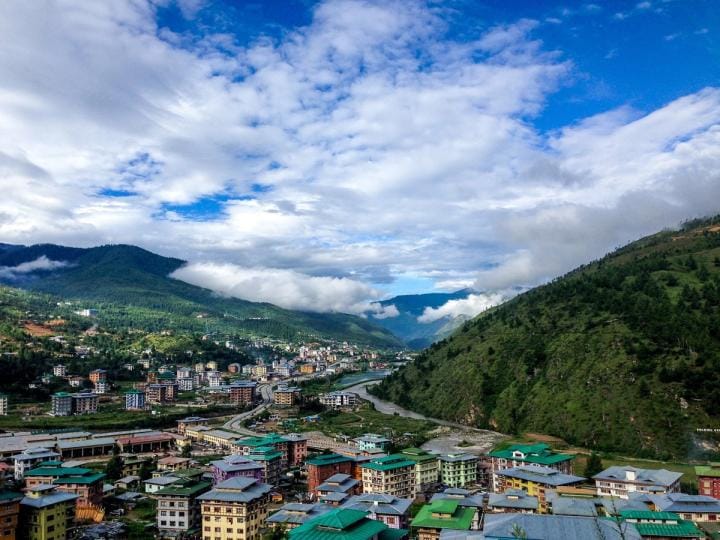
In a move that has sent shockwaves through the global crypto community, Bhutan is quietly unwinding one of the most unique Bitcoin experiments ever conducted by any government. The tiny Himalayan kingdom has sold off roughly 70% of its Bitcoin holdings over the past 18 months, marking the end of a pioneering hydropower-driven national Bitcoin mining model.
Bhutan's Bitcoin Exit
According to data from Arkham Intelligence, the Royal Government of Bhutan transferred approximately 319.7 BTC worth $22.68 million to two separate addresses last Thursday. Roughly 250 BTC was sent to a wallet previously used to route funds for sales through Galaxy Digital and OKX, while the remaining 69.7 BTC was moved to a new, unidentified address.
This is only the latest transaction in a long-running series of sell-offs. From a peak of around 13,000 BTC in October 2024, Bhutan now holds just 3,954 BTC valued at approximately $280.6 million — a 70% decline over 18 months.
A Breakthrough Hydropower Bitcoin Mining Model
Bhutan was once a living proof of concept for state-level Bitcoin mining. Its advantages were hard to replicate: a small, landlocked nation with abundant cheap renewable energy from hydropower, no legacy financial infrastructure to protect, and a sovereign wealth fund willing to experiment — Druk Holding and Investments.
Bhutan's hydropower-backed Bitcoin mining was widely regarded as an ideal model for state-level Bitcoin accumulation. The country leveraged its rivers' energy surplus to run mining farms, creating a new revenue stream while diversifying its foreign reserves.
Signs That Mining Has Stopped
Notably, Bhutan's Bitcoin mining activity may have ceased or dropped off sharply. Arkham data shows the last Bitcoin inflow to Bhutan's wallets above $100,000 was recorded more than a year ago. This suggests a government that once minted Bitcoin from its own hydropower may now simply be drawing down accumulated reserves, with no new supply to replace what has been sold.
Market Context and Economic Pressure
Bhutan's sell-off is unfolding while nearly every other major institutional player is accumulating more crypto. MicroStrategy just purchased an additional 4,871 BTC for $330 million last weekend, bringing its total holdings to 766,970 BTC. U.S. Bitcoin ETFs absorbed roughly 50,000 BTC in March alone. Even the Ethereum Foundation chose to stake $93 million in ETH in a single day rather than sell.
Even gold-backed sovereign funds are adding exposure amid the Iran conflict. Bhutan stands as the only sovereign-level holder openly liquidating its position.
The Economic Factors Behind the Decision
The shift can likely be explained by fundamental economics. Bhutan's Bitcoin mining may have been viable when difficulty was lower and Bitcoin was trading above $90,000. At the current price around $71,000, with network difficulty at all-time highs and block rewards halved to 3.125 BTC, profit margins for small-scale national mining have been squeezed significantly.
The data shows $215.7 million in Bitcoin has left Bhutan's holding addresses this year alone, with $162.6 million of that flowing to unlabeled wallets.
Impact on the Global Crypto Community
Bhutan's retreat from the Bitcoin market is more than an isolated event — it reflects the real challenges small nations face when entering the crypto space. It raises serious questions about the sustainability of the state-level Bitcoin mining model, particularly as the market grows more competitive and operating costs rise.
- Halving pressure: The reduction of block rewards to 3.125 BTC has significantly eroded mining profitability
- Soaring difficulty: Network difficulty has hit record highs, demanding more energy and capital
- Price volatility: Bitcoin's drop from a $90,000+ peak to around $71,000 has directly cut into revenue
Government Silence
Druk Holdings has not responded to multiple emails and calls from reporters over the past week, and no public statement has been made regarding the transfers or the status of its mining operations. The silence has only fueled speculation about whether Bhutan is exiting Bitcoin entirely.
Bhutan's decision to offload 70% of its Bitcoin reserves over the past 18 months marks the end of one of the boldest experiments in crypto history. While it may well be the financially rational call given the economic headwinds, it also lays bare the real-world constraints that small nations face when trying to participate in digital asset markets. Whether this signals the death knell for the state-level Bitcoin mining model or is simply an isolated case, only time will tell.