China's Supreme Court Amends Anti-Money Laundering Law to Include 'Virtual Assets'
The Supreme People's Court said the number of people prosecuted for money laundering has increased 20-fold since 2019. China's Supreme People's Court and Supreme People's Procuratorate have updated their interpretation of the country's Anti-Money Laundering (AML) law to recognize "virtual asset" transactions for the first time. China passed its current AML law on January 1, 2007, and the latest amendment is the first major update in nearly two decades. At a conference on August 19, the Supreme People's Cou
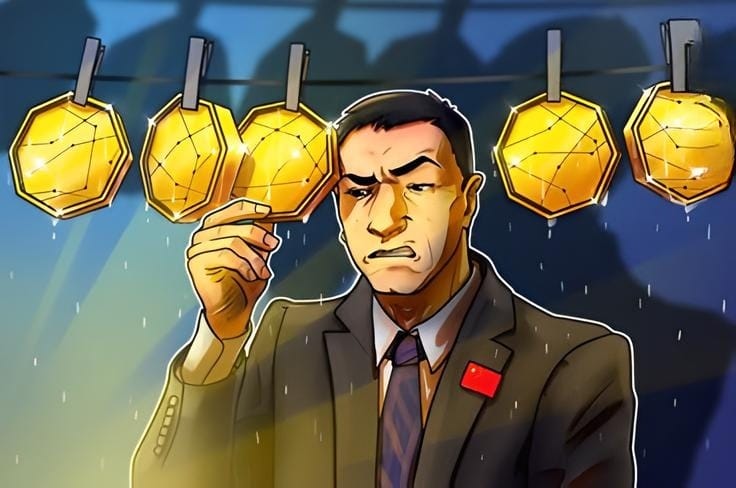
The Supreme People's Court said the number of people prosecuted for money laundering has increased 20-fold since 2019.
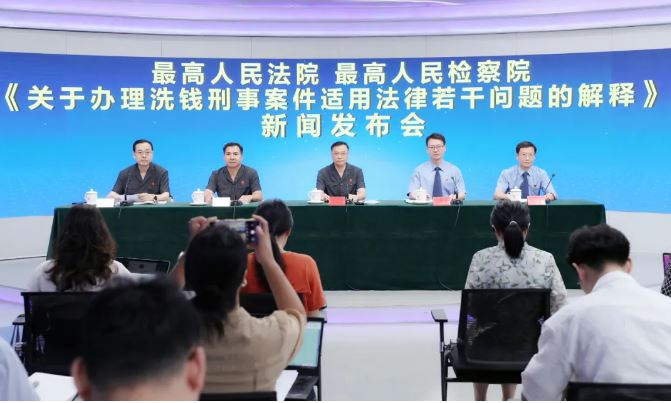
China's Supreme People's Court and Supreme People's Procuratorate have updated their interpretation of the country's Anti-Money Laundering (AML) law to recognize "virtual asset" transactions for the first time.
China passed its current AML law on January 1, 2007, and the latest amendment is the first major update in nearly two decades.
At a conference on August 19, the Supreme People's Court and Supreme People's Procuratorate said that under the new interpretation of the law, "virtual asset" transactions are now listed as one of the recognized methods of money laundering.
This comes amid recent speculation on X that the country may be considering lifting its crypto ban — though many remain skeptical.
China's AML Law Amendments
According to the court, the transfer and conversion of criminal proceeds through digital transactions will be covered under regulations prohibiting "concealing and disguising the origin and nature of criminal proceeds and their benefits by other means."
Violators face penalties ranging from a minimum of 10,000 yuan ($1,400) up to 200,000 yuan ($28,000) for more serious offenses. Offenders may also face prison sentences of 5 to 10 years.
Other amendments include clearer guidance on "serious circumstances" in money laundering cases, such as refusing to cooperate with authorities or laundering amounts exceeding 5 million yuan ($700,000).
The Supreme People's Procuratorate said that in 2023, 2,971 people were prosecuted for money laundering — a 20-fold increase compared to 2019.
Debate Over China Potentially Lifting Its Crypto Ban
This comes as some industry executives have speculated that China may be considering reversing its crypto ban. In a since-deleted July 14 post on X, Galaxy Digital CEO Mike Novogratz shared a rumor suggesting China could "potentially lift the ban" on Bitcoin by the end of 2024.
On August 19, Tron founder and HTX crypto exchange figurehead Justin Sun fanned the flames by posting a comment on X asking which meme best fits China lifting its crypto ban.
However, some experts have dismissed the idea.
In July, Yifan He, CEO of major Chinese blockchain firm Red Date Technology, said he does not believe China will ever allow its citizens to freely trade Bitcoin using local currency.
Related: Crypto use in money laundering is "much lower" than cash — U.S. Treasury
Mikko Ohtamaa, co-founder of algorithmic investment protocol Trading Strategy, agreed, saying a Chinese reversal on crypto would directly contradict the government's political agenda.
The country banned crypto exchanges in 2017 and carried out a sweeping cross-sector crackdown on crypto in 2021.
Qingdao Police Bust $1.1M USDT Money Laundering Operation
According to a report from Chinese media, Qingdao police are currently handling a case involving a network discovered to have used the Tether (USDT) stablecoin to launder more than 8 million yuan ($1.1 million) for criminal organizations.
Officials allege that three key individuals in the case recruited friends to use their business licenses and ID documents to open public accounts, which were then used to receive funds from criminals seeking to launder money.
The funds were subsequently converted to USDT and transferred back to the criminals, with the laundering network collecting a commission for their efforts. Nine people are currently facing criminal charges and awaiting trial.