Circle Proposes New Capital Risk Management Framework for Stablecoins
In July 2024, Circle became the first stablecoin issuer to comply with the European Union's Markets in Crypto-Assets (MiCA) regulatory framework. Circle, the issuer of USD Coin (USDC), recently published a white paper titled "Capital Risk for Stable Value Tokens," proposing a new risk-based capital management model for stablecoins and other digital currency tokens. The paper's authors argue that stablecoins require robust capital reserve requirements that go beyond the current capital standards established under the Basel regulatory framework in order to mitigate risks unique to stablecoins, other fiat-equivalent tokens, and their issuers.

In July 2024, Circle became the first stablecoin issuer to comply with the European Union's Markets in Crypto-Assets (MiCA) regulatory framework.
Circle, the issuer of USD Coin (USDC), recently published a white paper titled "Capital Risk for Stable Value Tokens," proposing a new risk-based capital management model for stablecoins and other digital currency tokens.
The paper's authors argue that stablecoins require robust capital reserve requirements that go beyond the current capital standards established under the Basel regulatory framework in order to mitigate risks unique to stablecoins, other fiat-equivalent tokens, and their issuers.
According to the authors, these unique risks include — but are not limited to — token price discounts caused by secondary market trading and the prevalence of secondary markets, which can trigger "runs" on digital tokens driven by panic selling, as well as operational risk and technology risk.
Token Capital Adequacy Framework
These unique challenges set stablecoin issuers and their digital assets apart from traditional banks. The paper's authors contend that the solution is to adopt what they call the Token Capital Adequacy Framework (TCAF).
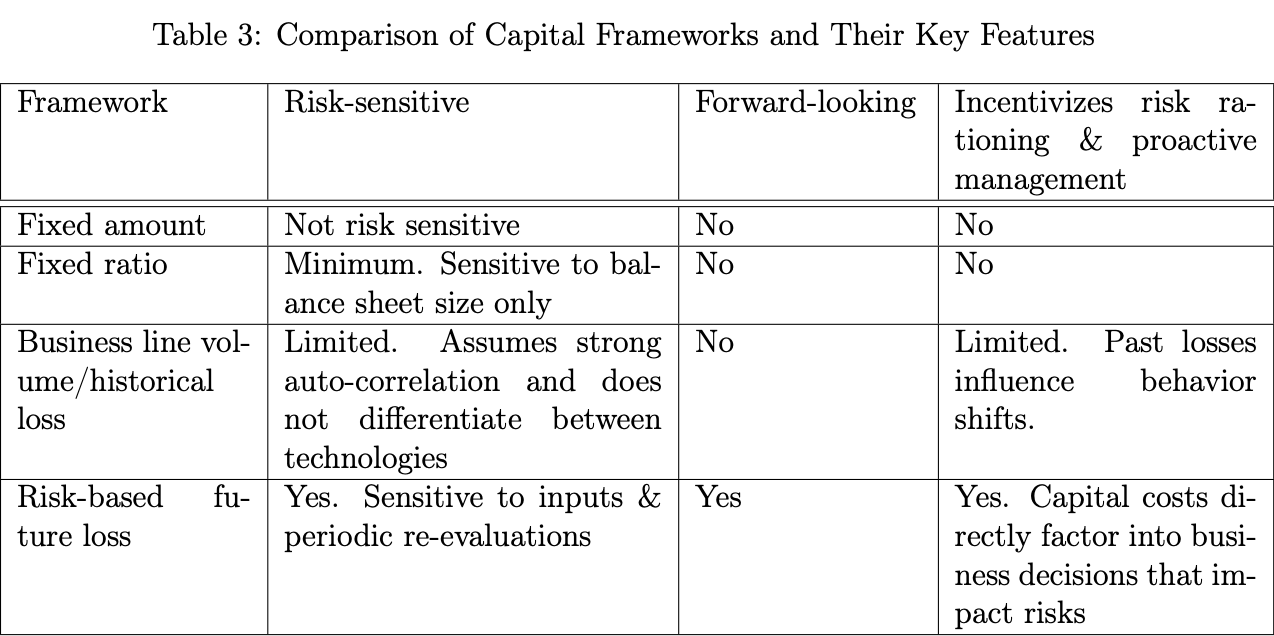
Circle's white paper explains that current banking regulations rely on fixed-ratio risk standards and risk weightings that do not necessarily reflect actual risk levels. The authors cite long-dated government bonds as an example — despite carrying significant interest rate risk, they carry a zero risk weighting under current banking standards.
TCAF addresses this by applying a dynamic, risk-sensitive model that begins with reserve stress testing and stakeholder input. Technology risks — such as blockchain network performance and cybersecurity — are also factored into the TCAF model.
The paper also notes that TCAF's dynamic approach may result in capital requirements that are either more or less stringent than current banking standards, varying depending on the prevailing risk environment.
The Five Goals of the TCAF Framework
The new model proposed by Circle has five core objectives. First, it aims to distinguish between "ongoing" emerging risk factors and "past" risks that have been successfully mitigated or no longer pose a threat.
The model also aims to help regulators comprehensively address operational risks, while keeping the system as "simple as possible" — avoiding the bloated, costly risk management structures characteristic of traditional banking.
TCAF's fourth core objective is to provide a consistent operational risk management standard across jurisdictions and institutions. Last but certainly not least, the model seeks to build in incentives and accountability mechanisms to mitigate negative risk externalities.