Crypto Legalization in Russia: How It Works and Can It Help Evade Western Sanctions?
There's a thin line between love and hate, especially when it comes to the Russian government's stance on cryptocurrency. In December 2021, Elvira Nabiullina, Governor of the Central Bank of Russia, declared: "We cannot welcome investment in such assets. We believe Russia's financial infrastructure should not be used for cryptocurrency transactions." By July 2024, she had expressed a completely different view: "We expect the first cryptocurrency payment transactions to be completed by the end of this year."
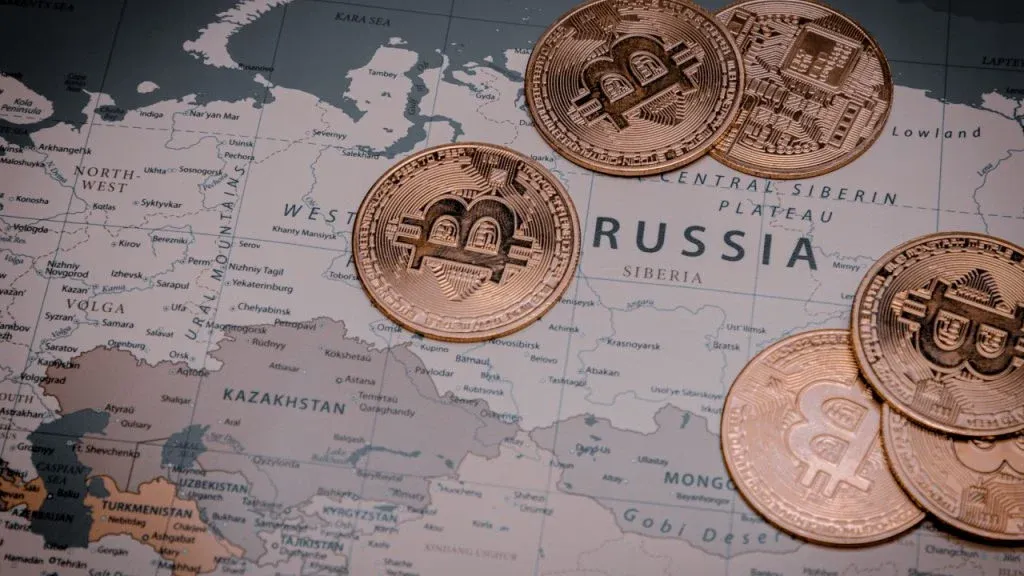
There's a thin line between love and hate, especially when it comes to the Russian government's stance on cryptocurrency. In December 2021, Elvira Nabiullina, Governor of the Central Bank of Russia, declared: "We cannot welcome investment in such assets. We believe Russia's financial infrastructure should not be used for cryptocurrency transactions." By July 2024, she had expressed a completely different view: "We expect the first cryptocurrency payment transactions to be completed by the end of this year."
Initially, the Kremlin viewed cryptocurrency as a threat. It was designed to replace traditional financial systems, which made it look like an uncontrollable tool for the regime. However, with the Western world now designating Russia as a state sponsor of terrorism, crypto has become one of the last remaining means of securing payments for import and export contracts.
In the summer of 2024, Russia's State Duma (the lower house of parliament) legalized cryptocurrency and crypto mining. The Kremlin made no attempt to hide the fact that this was a direct consequence of sanctions imposed since late 2023, which had complicated trade with "friendly" nations. Can crypto save the Russian economy?
Forced to Look for Alternatives
In 2024, Russia's international trade began to decline as the country ran into serious problems processing international payments under import and export contracts. Foreign banks refused to accept payments from Russia out of fear of secondary sanctions from the United States. The National Bank of Ukraine, which has been involved in shaping anti-Russia sanctions, noted: "Dollar and euro payments via SWIFT are easy to sanction. Reports emerge almost daily that banks in China, Turkey, and the UAE are delaying or returning payments for certain categories of goods and services, confirming the difficulties Russia faces with traditional payment channels."
The problem had become so widespread that Russian President Vladimir Putin personally devoted effort in May of that year to addressing it, pledging to ensure that mutual trade would not be negatively affected by third-party countries. Yet since then, the situation for Russian businesses has not improved at all. Perhaps the only tangible economic benefit from Putin's visit to China was simplified exports of Russian veal cartilage and basil to China.
As a result, in the first half of 2024, Russia's total import volume fell by a third compared to analyst forecasts. Analysts had projected 13% growth, but imports actually dropped 14% year-over-year from 2023. Payment difficulties forced Russian companies to seek alternatives. Some began routing trade payments through intermediaries registered in "friendly" countries such as Serbia, Belarus, and Kazakhstan. Even that stopped working, however, as counterparties grew increasingly cautious about transacting with jurisdictions suspected of sanctions evasion.
Another option was routing payments through the Shanghai branch of Russia's Vnesheconombank. But that bank could not handle the volume of clients looking to transact, resulting in a waiting list that stretched for months. On top of that, these workarounds were not only inconvenient but required additional money and time with no guarantee of success. Many companies grew frustrated with the traditional financial system and began exploring unconventional payment methods — for instance, merchants started engaging in barter trade with India, exchanging petroleum products for aluminum.
Using Crypto for Trade
Vladimir Chistyukhin, Deputy Governor of the Central Bank of Russia, said in July 2024: "If non-mainstream payment mechanisms are not developed under sanctions, an export-oriented economy will likely perish." Cryptocurrency — the very thing the Central Bank of Russia had wanted to ban just two and a half years earlier — has now become one of those mechanisms. In the summer of 2024, the State Duma passed two laws legalizing cryptocurrency in Russia.
The first law legalized crypto mining, which had not actually been banned in Russia prior to the new legislation. Starting November 1, crypto mining would officially be brought under Russia's regulatory framework. The law sets requirements for mining participants, requiring them to register with the Ministry of Digital Development and report information about the cryptocurrencies they mine to Rosfinmonitoring, Russia's Federal Financial Monitoring Service.
The second law legalized the circulation of digital financial assets, making Russia one of the rare jurisdictions in the world to recognize cryptocurrency at the national level. Unlike countries such as El Salvador, which adopted Bitcoin as legal tender, Russia will not accept crypto as a means of payment domestically. The Kremlin is permitting cryptocurrency solely for cross-border payment transactions.
Crypto had already been used for such transactions before, but informally. "Now customs will be able to identify these payments: companies will be able to prove that goods were paid for in cryptocurrency," commented Vladyslav Vlasiuk, Ukraine's sanctions policy commissioner. Currently, crypto payments in Russia are brokered by agents: Russian importers transfer rubles to the agents, who then purchase crypto assets from exchange operators and execute payments to the receiving parties.
Russians typically use stablecoins — tokens pegged to traditional currencies such as the USD — for these transactions. USDT and USDC are the most widely used. Vlasiuk noted that they are central to the Kremlin's crypto legalization framework. The use of intermediaries drives up the cost of crypto transactions for Russian importers. This is one reason crypto payments have not yet offered a viable alternative to traditional payment methods for Russians, despite the difficulties of transacting through the banking system in USD or EUR. Legalization is expected to make crypto payments cheaper and easier — at least in theory.
How Does Crypto Actually Work Here?
Details on how crypto payments will function in Russia remain scarce: the new laws do not specify any requirements for those who wish to make crypto payments. The State Duma has tasked the Central Bank of Russia with drafting regulations for crypto transactions. The bank has essentially been given broad authority to design a crypto transaction system and establish rules governing the payment process and all parties involved.
Back in 2021, Elvira Nabiullina was skeptical about crypto legalization, but a great deal has changed in Russia over the past three years. The Central Bank of Russia will be able to establish an Experimental Legal Regime (ELR) across various sectors of the economy, selecting participants and defining their roles. Participants in an ELR will be exempt from certain provisions of Russian federal law.
Cross-border transactions are expected to take place within a financial market ELR. The Central Bank will create an ELR for regulated crypto trading. Russia may establish an official crypto exchange or grant crypto trading rights to existing exchanges. Russia's largest exchange, the Moscow Exchange, has declined to participate in the pilot.
Furthermore, the Central Bank needs to integrate crypto payments into the national payment system, encompassing the national payment card system, fast payment system, central bank payment system, depository system, and financial information system. The Central Bank of Russia may achieve its first cross-border crypto payment by the end of 2024. To reach that goal, however, Russia needs not only to design an adequate technical system but also to figure out where and how to source enough cryptocurrency to handle billions of dollars in foreign trade.
Can It Actually Evade Sanctions?
For Russia's plan to use crypto to route around Western financial systems to succeed, it's not enough for Russia alone to legalize crypto payments. Its trading partners must also accept those payments — which may still prove difficult. In China, for instance, cryptocurrency has been banned since 2021 (the ban does not apply to Hong Kong). To use crypto in transactions with its largest trading partner, Moscow would have to rely on a chain of intermediary companies, which would only drive up transaction costs further.
Other BRICS partners — Brazil, India, and South Africa — also appear reluctant to legalize cryptocurrency, even for international payments. The crypto market is no longer a completely unregulated or government-oversight-free space. Crypto exchanges operate under financial monitoring standards and must comply with Western sanctions to avoid facing secondary restrictions themselves.
Ukrainian crypto analysts believe Russia's new plan amounts to shooting itself in the foot. Crypto transactions may actually make it easier for Western governments to expand sanctions. "Tracking all participants on blockchain exchanges is straightforward, because they are recorded on the blocks. Many companies around the world can analyze this data. When Russian companies start using cryptocurrency, it will be easier to identify their trading partners," said Nataliia Drik, president of the Blockchain Association of Ukraine.
Moreover, using stablecoins in international trade will expose Russian businesses to additional restrictions, which appears all but inevitable. The National Bank of Ukraine noted: "Sanctions pressure on individuals (particularly those participating in the Central Bank of Russia's crypto pilot) and new sectors of the Russian economy will increase; for example, additional measures may be applied to restrict Russian customers' access to the dollar-pegged stablecoin market — the type of cryptocurrency Russian companies use for payments, according to several news investigations."