Ethereum Falls Below $1,500 — Vitalik Buterin Stays Calm: "I Don't Watch the Price"
When Ethereum (ETH) dropped below $1,500 on April 7 — down more than 60% from its $4,000 peak — investors began worrying about a deep correction. A single-day plunge of over 15% rattled markets, fueling speculation and anxiety. For Ethereum co-founder Vitalik Buterin, however, the event was hardly worth a second glance. At the Web3 Scholars Conference held in Hong Kong on April 8 — Vitalik's first return to the city in over a year — he projected calm and unwavering commitment to his long-term vision for Ethereum.
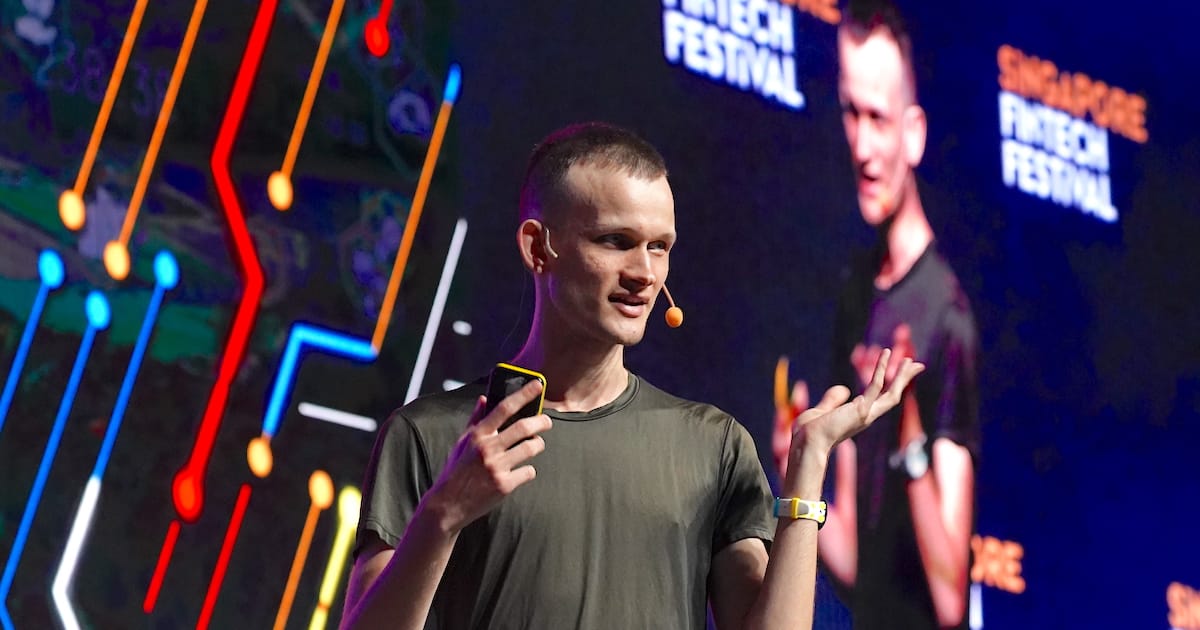
When Ethereum (ETH) dropped below $1,500 on April 7 — down more than 60% from its $4,000 peak — investors began worrying about a deep correction. A single-day plunge of over 15% rattled markets, fueling speculation and anxiety. For Ethereum co-founder Vitalik Buterin, however, the event was hardly worth a second glance.
At the Web3 Scholars Conference held in Hong Kong on April 8 — Vitalik's first return to the city in over a year — he projected calm and unwavering commitment to his long-term vision for Ethereum.
"I don't watch the price," Vitalik told a packed auditorium, drawing a round of applause. "What matters is the technology and its development."
Vitalik's "Technology First" Vision
Rather than discussing market movements, Vitalik focused on sharing Ethereum's long-term development goals, with an ambition to build a more flexible, efficient, and scalable network. Key highlights from his talk:
- Establishing native asynchronous connectivity between Layer 1 and Layer 2 within 12 seconds
- Supporting intent-based user interactions with low latency and optimized costs
- A technical roadmap built on three pillars: ZK (Zero-Knowledge), TEE (Trusted Execution Environment), and OP (Optimistic Rollups) — developers are encouraged to "pick 2 of 3" depending on their goals
- Deeper L1–L2 integration to incentivize applications to deploy across both layers
Vitalik also stressed the need to reduce proof latency, optimize Layer 1 load, and roll out the Pectra upgrade — expected in Q2 of this year — to improve overall Ethereum network performance.
Markets Divided on Ethereum's Future
ETH's sharp decline has exposed a clear divide within the financial community.
The bears:
- Standard Chartered slashed its ETH price target from $8,500 to $2,500 in March 2025, citing tightening global regulation, slow Layer 2 adoption, and institutional capital outflows.
- The bank also warned that ETH could be classified as a security by the SEC.
- Morgan Stanley predicted the ETH/BTC ratio could fall to 0.015 by 2027 — its lowest level since 2017.
- Data shows the top 100 wallets hold 39% of all ETH supply, raising concerns about centralization and competitive pressure from chains like Solana and Cardano.
The bulls:
- Grayscale continues to view ETH as a core holding in its Q1 2025 portfolio, citing its rich ecosystem and strong developer base.
- Galaxy Digital highlights attractive staking yields (~4% annually), Layer 2 dominance (70% of on-chain activity has migrated to L2), and the asset tokenization opportunity.
- Galaxy expects ETH could surpass $5,500 this year if the Pectra upgrade and AI-integrated applications launch on schedule.
Ethereum at a Crossroads
The ongoing debate comes down to one central question: Can Ethereum transform from a "congested network" into an efficient modular platform?
Vitalik Buterin believes it can — and that the answer has nothing to do with short-term price action.
"Capital can be eroded by taxes, regulation, competition, and uncertainty," Vitalik wrote on X. "Bitcoin and Ethereum offer resilience in a world full of hidden risks."
As Ethereum enters a pivotal phase, investors must ask themselves: are they betting on the price… or on the technology?