Five Crypto Market Predictions That Never Panned Out — But Might Still Have Time
In the crypto world, market narratives and predictions often promise spectacular wins, but not all of them deliver — and the market has a notoriously short memory, repeatedly falling into the same old traps. Success in crypto trading is often attributed to a solid grasp of fundamentals, sharp technical analysis skills, or access to market intelligence. Yet the primary driver of price volatility typically comes from market narratives. These narratives

In the crypto world, market narratives and predictions often promise spectacular wins, but not all of them deliver — and the market has a notoriously short memory, repeatedly falling into the same old traps.
Success in crypto trading is often attributed to a solid grasp of fundamentals, sharp technical analysis skills, or access to market intelligence.
Yet the primary driver of price volatility typically comes from market narratives.
These narratives may or may not have a solid theoretical foundation, but respecting them is essential to succeeding in crypto investing.
One thing to keep in mind: narratives can emerge with tremendous force — and fade just as quickly.
In 2024, several crypto narratives took center stage.
Memecoins were among the strangest trends, thriving on hype, humor, and strong online communities despite having no intrinsic value or real-world utility. These tokens tend to attract investors chasing quick gains, but their longevity remains a big question mark.
More serious narratives also emerged, such as the growth of decentralized physical infrastructure networks (DePINs) and the tokenization of real-world assets (RWAs) — both aimed at solving tangible problems.
DePINs focus on decentralizing infrastructure like power grids using blockchain, while RWA tokenization refers to putting assets like real estate and commodities on-chain. Experts predicted RWA tokenization could unlock a $30 trillion market, though that hasn't materialized yet.
The standout narrative right now is the approval of spot Bitcoin (BTC) and Ether (ETH) exchange-traded funds (ETFs).
ETFs provide a bridge between traditional finance and crypto, encouraging institutional adoption and legitimizing the market. BlackRock's Bitcoin ETF attracted over $20 billion in BTC, fueling optimism and market growth.
As these narratives have evolved, history shows that many trends tend to fade or fall short of expectations — and Cointelegraph has rounded up five key market narratives that never quite came true.
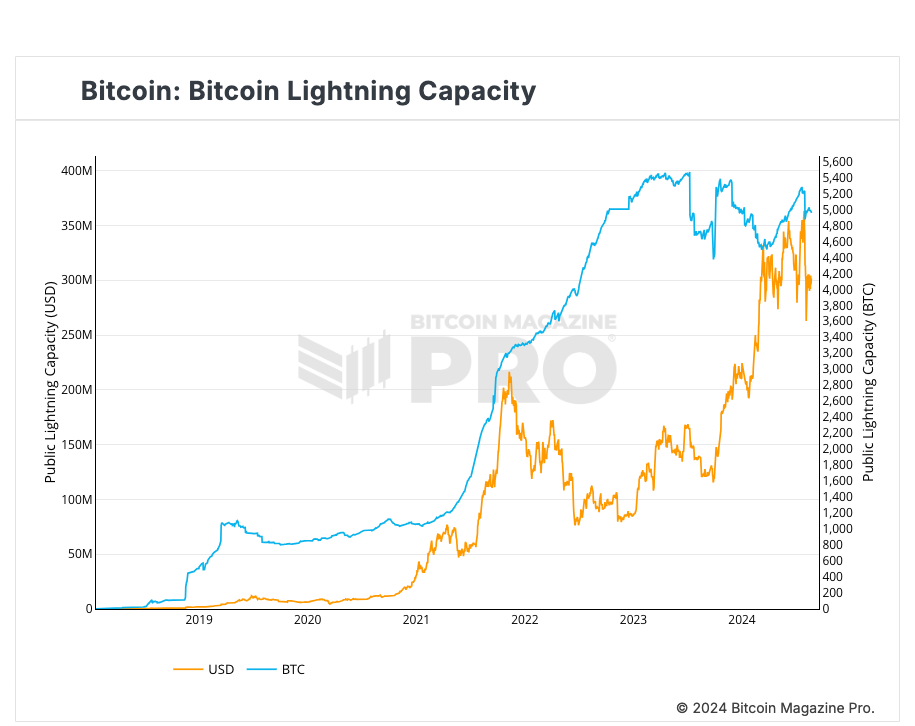
The Lightning Network Will Turn Bitcoin Into a Viable Payment Currency
In the 2008 Bitcoin white paper, Satoshi Nakamoto envisioned Bitcoin as a digital currency independent of central banks and institutions:
"A purely peer-to-peer version of electronic cash would allow online payments to be sent directly from one party to another without going through a financial institution."
One major obstacle to using Bitcoin as a payment currency is the network's slow transaction speed.
Visa can process 24,000 transactions per second (TPS), Mastercard can handle 5,000, while Bitcoin currently maxes out at just seven. The stark gap between these payment platforms makes it clear that Bitcoin needs a throughput solution before it can function as a viable payment currency.
The Lightning Network (LN) is one such solution.
Lightning is a layer-2 protocol built on top of the Bitcoin blockchain that can process payments through a parallel, faster, and lighter network to reduce load on the main chain. In theory, LN can handle 1,000,000 TPS and settle them all instantly.
🇺🇬 Today we give a warm welcome to our third partner clinic in Uganda - Wana Dental Clinic and its owner Dr. Alex Ndikumwami. The team's mission at the clinic is to bring back healthy smiles to patients and to assure a better social life for more people. https://t.co/BXa06JEEZa pic.twitter.com/45wfQQ5nzG
— Dentacoin (@dentacoin) June 2, 2022
However, Lightning has run into challenges around network security and liquidity, adding technical complexity to crypto usage and holding back global adoption.

This L2 solution hasn't failed — it just needs improvements before it can handle payments at global scale.
Blockchain Is the Solution for Everything
"Put it on the blockchain" has long been a buzzword in business circles — a way to hype something up without delivering any real benefit.
The 2017 crypto bull run and the ICO frenzy introduced cryptocurrency to a mass audience.
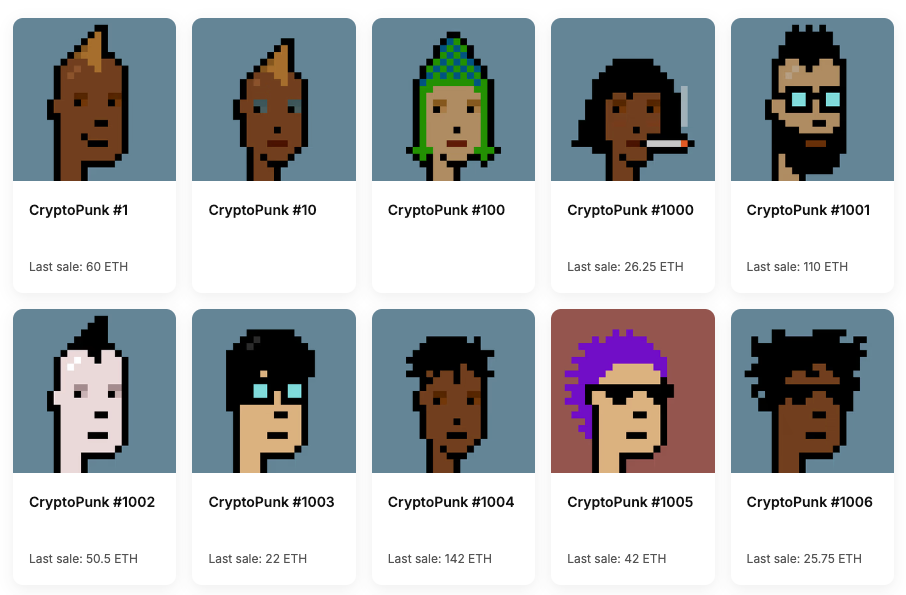
Blockchain was aggressively pitched as a technology capable of solving any industry's problems.
Blockchain would improve global supply chains, eliminate government corruption, ensure tamper-proof elections, provide digital identity, establish intellectual property rights — and the list goes on.
During the 2017 crypto frenzy, blockchain became a hot buzzword as businesses scrambled to apply versions of the technology to improve their sectors or simply to attract attention.
Projects like PetChain, which used blockchain to track household pets, and Dentacoin, which aimed to build a decentralized ecosystem to improve aspects of dental care, are among the more unusual examples of blockchain being put to work.
The hype surrounding blockchain obscured its genuine benefits, leading to a glut of projects that often lacked real-world utility. When the dust settled, it became clear that blockchain can solve specific challenges — but not every problem needs a blockchain solution.
The NFT Dream of Digital Ownership
Non-fungible tokens (NFTs) exploded in January 2021 and broke into the mainstream in March 2021, when crypto entrepreneur Sina Estavi purchased Twitter founder Jack Dorsey's first tweet as an NFT for $2.9 million. Today, the best offer on that NFT sits at just over $2,000 — or about 0.8 Ether at current prices — according to OpenSea.
NFTs offered the ability to prove ownership of digital content. This was a breakthrough, as it had the potential to transform multiple sectors and create a market for in-game assets and digital collectibles.
NFTs addressed a real problem for digital artists, whose work could easily be copied or stolen. A token would provide proof of ownership, with the artwork embedded in the mint.
The emergence of this new digital marketplace triggered one of the most frenzied hype cycles in crypto history, as buyers piled in to be first owners of particular NFTs.
Millions of dollars flooded into NFT collections and algorithmically generated profile picture (PFP) sets distinguished only by minor variations. The mania peaked — and now NFTs are selling at steep losses.
The NFT collapse can likely be traced to their use in wash trading, a lack of copyright protections, and numerous scams that damaged their public image and ultimately spooked investors.
Although the mainstream associates NFTs with monkey profile pictures, they still carry real potential for practical applications.
In real estate, they could track historical ownership; in academia, they could enable tamper-proof certificate verification. Anti-counterfeiting systems for ticketing and new approaches to digital identity and reputation management could be built using NFT variants like soulbound tokens, proposed by Ethereum co-founder Vitalik Buterin.
These applications will only become reality if NFTs gain regulatory backing or broad acceptance from markets and consumers.
The Metaverse Will Offer a New Frontier for Social Interaction
In 1985, Lucasfilm's Habitat — a video game for the Commodore 64 — offered the first example of a virtual cyberspace where users could interact.
Seven years later, in 1992, Neal Stephenson coined the term "metaverse" in his novel Snow Crash.
In the 1990s, the metaverse seemed on the verge of becoming real with the arrival of virtual reality (VR) headsets, which were seen as a technological revolution. But the market was overhyped and failed to capture mainstream attention, largely due to technological limitations.
Recent advances in augmented reality (AR), VR hardware, and faster internet speeds, however, have reignited interest in the metaverse.
The big moment came when Mark Zuckerberg announced Facebook's rebrand to Meta and pledged deep investment and development in the metaverse.
The crypto metaverse narrative centers on creating a decentralized, immersive digital universe where users can interact, create, and trade in a virtual space. Blockchain and cryptocurrency provide true digital ownership and interoperability, as well as the foundation for new digital economic systems.
Like the NFT craze, enormous sums poured into blockchain-based metaverse projects. Virtual real estate sold for staggering prices — 116 digital "parcels," for instance, sold for $2.4 million.
But the rush into leading metaverse platforms like The Sandbox and Decentraland came to a swift end.
Despite raising millions of dollars, data from DappRadar shows Decentraland averaging around 300 daily active users, while The Sandbox hovers around 200.
The metaverse investment hype may have simply arrived too early. An underdeveloped product failed to meet gaming expectations and ultimately left users bored. Meta lost $16 billion in 2023 and continues to bleed money on its metaverse investments. With new technological improvements, a profitable and functional metaverse may still emerge — only time will tell.
Privacy Coins Will Go Mainstream as People Demand Private Transactions
Contrary to popular belief, cryptocurrency doesn't automatically provide full anonymity. Most crypto operates on a public blockchain, offering only pseudonymity at best — and privacy coins aim to fix that.
Leading privacy coins like Monero (XMR) and Zcash (ZEC) were created to protect anonymity in financial transactions and ensure financial privacy.
These coins surged during the 2017 bull run and staged a comeback in 2021. As regulators began paying attention to privacy coins, interest in them picked back up.
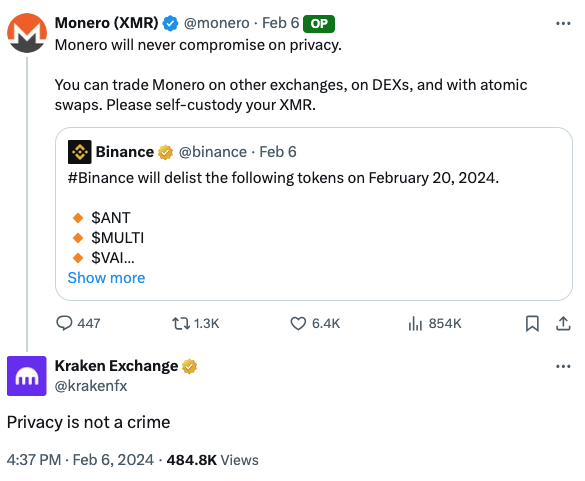
Yet the regulatory forces appear to be winning so far.
Privacy coins have been stigmatized by sustained regulatory pressure tied to illicit activity such as money laundering and tax evasion.
Although prices rose in 2017 and 2021, many exchanges began delisting privacy coins in 2022 to avoid regulatory blowback as pressure mounted, resulting in severe liquidity and accessibility constraints.
Law enforcement capabilities have also evolved alongside improvements in advanced forensic analysis tools and blockchain analytics firms that can trace some transactions. While Monero itself hasn't been cracked, the fact that other privacy coins can be tracked has undermined their selling point of complete untraceability.
Moreover, most mainstream crypto users feel sufficiently protected by the pseudonymity offered by leading cryptocurrencies like Bitcoin or Ether — and proposals to make those more private reduce the appeal of niche privacy coins even further.