Is the Market Selloff Over? Could Trump Firing Powell Be the Next "Positive Shock"?
U.S. financial markets have been thrown into chaos once again. Even though March CPI data came in as a surprise positive — core CPI posted its slowest growth in four years and fell on a monthly basis for the first time in five years — that optimism was quickly overshadowed by hardline tariff rhetoric from former President Donald Trump. Trump's threats to impose steep tariffs on China, Mexico, and Canada reignited fears of a global trade war, triggering a broad selloff across asset classes.
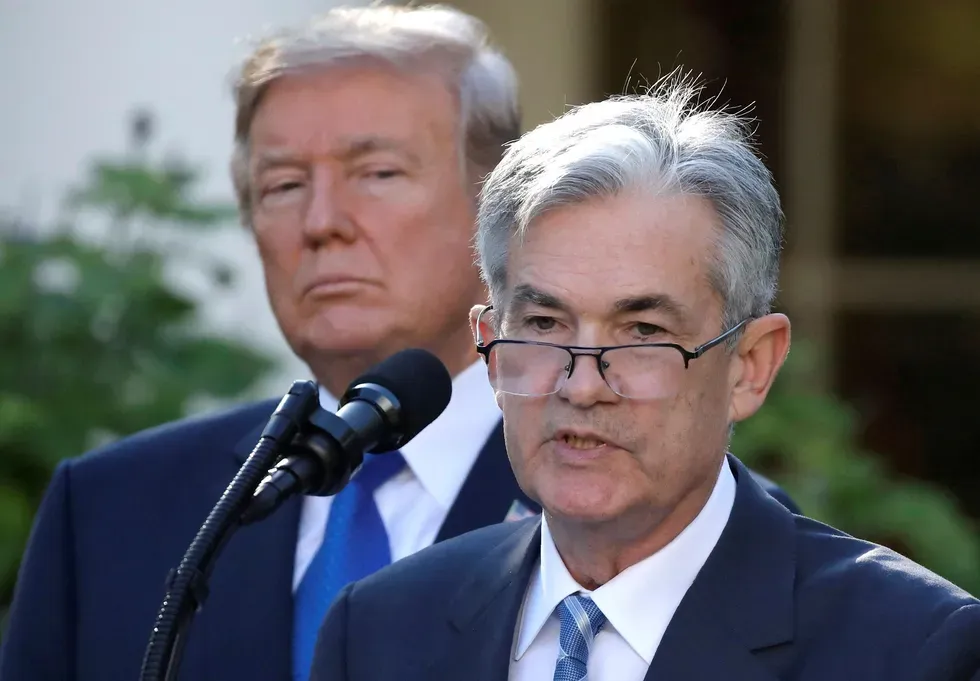
U.S. financial markets have been thrown into chaos once again. Even though March CPI data came in as a surprise positive — core CPI posted its slowest growth in four years and fell on a monthly basis for the first time in five years — that optimism was quickly overshadowed by hardline tariff rhetoric from former President Donald Trump. Trump's threats to impose steep tariffs on China, Mexico, and Canada reignited fears of a global trade war, triggering a broad selloff across asset classes.
As stocks, the dollar, and crypto plunged, capital flooded into safe-haven assets like gold, the Japanese yen, and the Swiss franc. Amid the market turmoil, a bold question began to emerge: Could Trump firing Fed Chair Jerome Powell become the "catalyst" that rescues markets? This article breaks down the current market landscape, the legal and procedural hurdles involved, and the far-reaching implications of such a scenario — pulling back the curtain on the power struggle between Trump and the Federal Reserve.
Good CPI News Buried by the Trade War
March CPI data should have given markets a confidence boost, signaling that inflation is gradually coming under control. Instead, Trump's announcement of 145% tariffs on Chinese imports — along with fresh threats against Canada and Mexico — stoked fears of an all-out trade war. Investors quickly grew concerned that prices would surge again, sending them scrambling into safe-haven assets.
On Thursday, U.S. equities failed to hold onto the previous session's recovery. The S&P 500 fell more than 6% intraday before closing down 3.46%. Tech stocks led the decline, with Tesla dropping over 7%. Bitcoin shed 5.2% and Ethereum plunged 11.7%. The USD index posted its sharpest single-day drop since 2022. Meanwhile, the Swiss franc surged nearly 4% against the dollar — its biggest one-day gain since 2015 — and gold topped $3,170/oz for the first time.
The bond market reflected a split in expectations. 10-year Treasury yields jumped more than 10 basis points, signaling rising inflation expectations. By contrast, 2-year yields dropped sharply immediately after the CPI print. These moves show that markets are simultaneously worried about both inflation and growth, leaving the Fed with an extraordinarily difficult policy call.
Could Trump Fire Powell to Save Markets?
Against this backdrop of uncertainty, some investors have floated the idea that firing Powell could be Trump's bold gambit to revive markets. The logic: replacing Powell with a more dovish Fed chair could prompt rapid rate cuts, easing pressure on equities and crypto while weakening the dollar to boost exports.
That scenario, however, runs into a wall of obstacles. Firing Powell could undermine the Fed's independence and erode investor confidence. Historically, leadership changes at the Fed tend to increase market volatility rather than spark rallies. And with a trade war potentially pushing inflation higher, a new Fed would have even less room to ease policy.
The tension between Trump and Powell isn't simply a policy disagreement — it's a deeply political power struggle.
The Trump–Powell Feud: A Fight Over Loyalty and Control
Trump has long accused Powell of undermining his economic agenda. In his view, the Fed kept rates low to support stimulus under Biden, but once he returned to the presidency, Powell kept hiking — sabotaging his tariff and trade policies.
Trump sees the Fed as a symbol of the Washington establishment. Despite having appointed Powell himself, he has been infuriated by Powell's repeated insistence on the Fed's independence. In 2023, Powell went so far as to publicly declare that the Fed would not be subject to White House interference — a very public rebuke of Trump.
Trump has framed the Fed as a bureaucratic institution disconnected from ordinary Americans, accusing Powell of making "workers and businesses suffer" through high interest rates. This isn't just a blame-shifting strategy — it's a political tool Trump uses to reinforce his image as a fighter against the elite.
Does Trump Have the Legal Authority to Fire Powell?
Legally speaking, this is a steep climb. Under current law and the precedent set by Humphrey's Executor (1935), the heads of independent agencies like the Fed can only be removed "for cause" — not over policy disagreements.
That said, Trump's legal team is working to change this. On April 9, Chief Justice John Roberts temporarily allowed Trump to remove members of agencies like the NLRB and MSPB, staying a lower court ruling. This case could serve as a stepping stone for Trump to argue that the Fed Chair should also be subject to presidential control.
Even if Trump prevails in court, he would still need to demonstrate "cause" — a very high bar, since Powell has not committed any clear violation and all his decisions have been data-driven. If fired, Powell would almost certainly sue, dragging out the entire process for months.
Procedural and Political Roadblocks
Even if Trump successfully fired Powell, he would still need to nominate a new Fed Chair and get Senate confirmation. While Republicans hold the majority, moderate senators could push back against a nominee seen as overly politicized. The confirmation process could drag on for months, during which the Vice Chair or another Fed member would serve in an acting capacity — meaning policy might not shift immediately.
Politically, firing Powell risks fracturing the Republican Party. Many lawmakers still support Fed independence and worry that political interference could destabilize markets. On the international stage, the dollar's credibility could also take a hit.
Market Impact: More Harm Than Good?
Powell's removal could generate a short-term psychological boost — stocks and crypto might rally on expectations of looser monetary policy. But the long-term risks are severe. If monetary policy becomes politicized, inflation could spiral out of control and economic confidence could collapse.
In a trade war environment that's already pushing prices higher, a new dovish Fed cutting rates or intervening in currency markets might provide a temporary demand boost — but at the cost of dramatically inflating the inflation risk.
Probability Breakdown
- Higher probability (25%): The Supreme Court overturns Humphrey's Executor, Trump moves to fire Powell but gets tied up in litigation.
- Medium probability (55%): The Court narrows removal protections, Trump ramps up pressure to force Powell's resignation.
- Lower probability (20%): The law continues to shield the Fed; Trump can only exert indirect influence by appointing new Fed Board members.
Conclusion
Stocks and crypto are caught between hopes of easing inflation and fears of an escalating trade war. While some see firing Powell as a "shock treatment" to jolt markets back to life, the legal and political obstacles make it an extraordinarily complex proposition.
All eyes are now on the Supreme Court — which will ultimately decide how far a president can reach into independent agencies. In the meantime, whether Powell stays or goes remains an open question, and markets will continue to be driven by uncertainty.
4o