Kevin Warsh and His Relationship with Crypto
On November 12, the Wall Street Journal reported that sources say U.S. President-elect Donald Trump is considering nominating former Fed Board of Governors member Kevin Warsh as Treasury Secretary. Sources also revealed that after Fed Chair Jerome Powell's term ends in 2026, Kevin Warsh could be nominated as Fed Chair. Some insiders say Trump is also considering appointing Scott Bessent to lead the White House National Economic Council. If Kevin Warsh
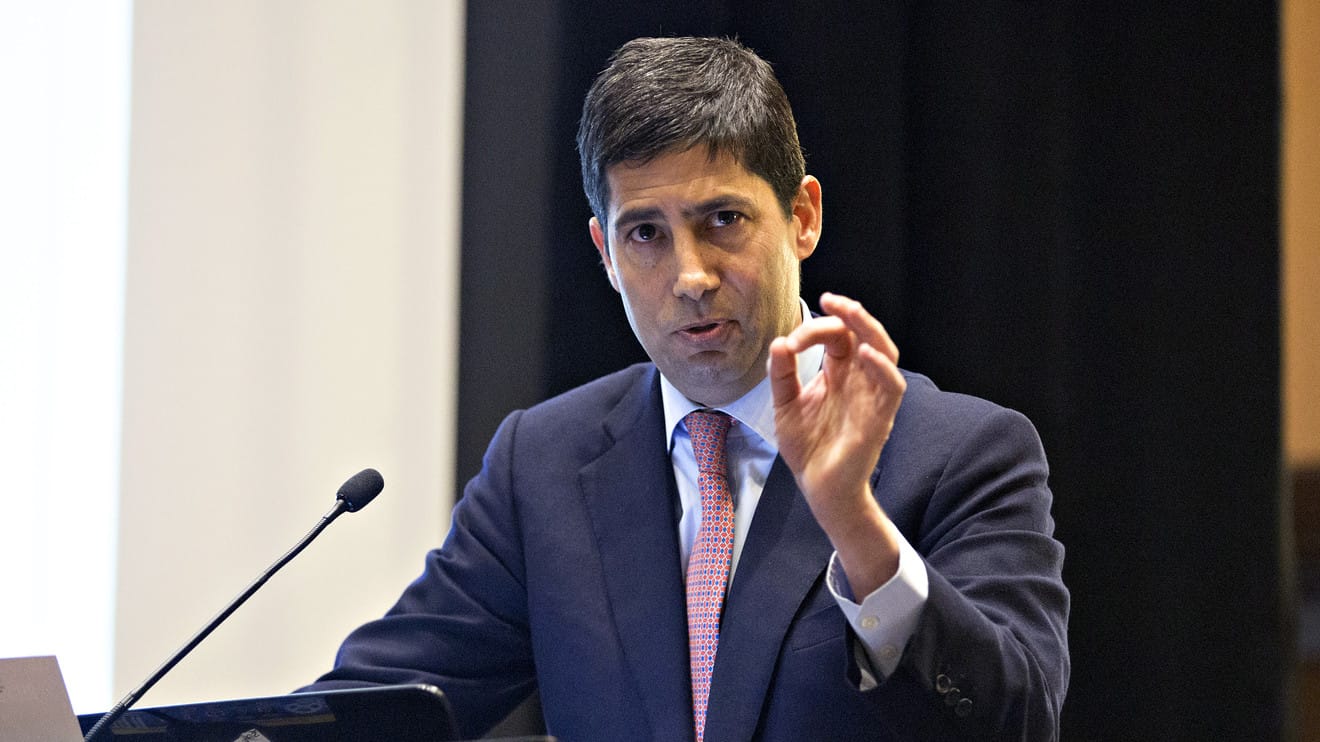
On November 12, the Wall Street Journal reported that sources say U.S. President-elect Donald Trump is considering nominating former Fed Board of Governors member Kevin Warsh as Treasury Secretary. Sources also revealed that after Fed Chair Jerome Powell's term ends in 2026, Kevin Warsh could be nominated as Fed Chair.
Some insiders say Trump is also considering appointing Scott Bessent to lead the White House National Economic Council. If Kevin Warsh becomes Fed Chair, Trump could nominate Scott Bessent as Treasury Secretary during his next term.
On the prediction market Polymarket, Kevin Warsh's odds in the race for "Who will Trump pick as Treasury Secretary?" climbed to 52%, while Scott Bessent stood at 29%.
One source said that during a meeting, Trump asked Warsh about his stance on tariff policy. Kevin Warsh had previously criticized Trump's trade protectionism, and in a 2018 Wall Street Journal op-ed argued that Trump's tariff plans could lead to "economic isolationism," which would seriously damage the outlook for economic growth.
Kevin Warsh, who was once a contender for the Fed's top job during Trump's first term, is back in the spotlight and could become Treasury Secretary — or potentially succeed Powell as Fed Chair down the road. This could have sweeping implications for U.S. economic policy and trigger significant volatility across financial markets and even the crypto industry.
Who Is Kevin Warsh?
Kevin Warsh was born in 1970 in Albany, New York. He studied public policy at Stanford University with a focus on economics and statistics, graduating with honors in 1992. He then attended Harvard Law School, specializing in the intersection of law, economics, and regulatory policy, and earned his J.D. in 1995. He also completed coursework in market economics and capital markets at Harvard Business School and MIT's Sloan School of Management.
In 1995, Kevin Warsh joined Morgan Stanley in New York, advising companies across manufacturing, basic materials, professional services, and technology. He also helped structure capital markets transactions and facilitated debt and equity fundraising.
In February 2002, Warsh resigned as Vice President and Executive Director at Morgan Stanley and joined the George W. Bush administration as Special Assistant to the President for Economic Policy and as Secretary of the National Economic Council. He advised the President and senior officials on economic matters, particularly those relating to capital flows in financial markets, securities, banking, and insurance.
In 2006, President Bush nominated Kevin Warsh to serve as a Member of the Fed's Board of Governors, a position he held until 2011. At 35, Warsh was the youngest person ever appointed to the Fed's Board.
Today, Kevin Warsh is a visiting fellow at Stanford University's Hoover Institution and a lecturer at Stanford Graduate School of Business.
Kevin Warsh's Views on Economic and Financial Policy
Kevin Warsh is a seasoned expert in finance and public policy. On monetary policy, Warsh has criticized the Fed's prolonged quantitative easing program, arguing that it could create an overly loose monetary environment, leading to inflation and financial asset bubbles. Warsh also supports Fed independence and opposes political interference in central bank decisions — a stance that puts him at odds with how Trump has historically pressured the Fed.
On trade and economic growth, Warsh is a free-trade advocate, viewing open trade as a critical connector of global economies and a key driver of growth and international economic stability.
He has also called for controlling government spending and pushed back against excessive deficit expansion, warning it could weigh negatively on U.S. economic growth.
Kevin Warsh's Relationship with Crypto
Kevin Warsh is fairly cautious about Bitcoin's volatility and most stablecoins, but he is open to central bank digital currencies (CBDCs). In 2018, he said: "If cryptocurrency and blockchain technology truly are the future of money, central banks around the world need to get involved. If I were to return to the Fed, I would designate a team to explore creating a Fedcoin."
That same year, Kevin Warsh wrote in the Wall Street Journal that cryptocurrency's price volatility had undermined its usefulness as a reliable unit of account or an effective payment instrument. However, he believed a new generation of cryptocurrencies would emerge, with some potentially exhibiting more currency-like properties and better fulfilling Bitcoin's original purpose.
Warsh has also made investments in several crypto projects. In 2018, he invested in the algorithmic stablecoin project Basis (formerly Basecoin, now defunct), and in 2021, he invested in crypto index fund manager Bitwise. Basis raised $133 million from major investors including Bain Capital Ventures, GV, Stanley Druckenmiller, Kevin Warsh, Lightspeed, Foundation Capital, and Andreessen Horowitz.
In November 2022, Warsh published a piece titled "Money Matters: The US Dollar, Cryptocurrency, and the National Interest," in which he argued that "cryptocurrency is not money — it is software. The emergence of stablecoins has made this software more money-like. Some stablecoins may become currencies of significant value, but most will not. The Fed should create a wholesale digital currency that strengthens the U.S.'s economic and geopolitical position, while ensuring that volatility does not jeopardize the dollar's standing."
Conclusion
Kevin Warsh's potential appointment to key roles such as Treasury Secretary or Fed Chair could have far-reaching consequences for U.S. economic policy as well as financial markets and crypto. Investors and crypto enthusiasts should closely monitor his policy moves and any changes that may unfold in the regulation of digital assets.
4o mini