Multicoin Co-Founder's TOKEN2049 Speech: "Why Solana Will Overtake Ethereum"
Good morning, everyone! I'm Kyle Samani, co-founder and managing partner of Multicoin. Today I'm going to talk about why we believe Solana will overtake Ethereum. Some of you may already agree, others might think it's absurd or impossible. My goal is at least to make you reconsider the dynamics at play. The talk will be divided into three parts. First, I'll give a brief history of Ethereum, because it's important to understand where Ethereum stands and what its problems are. Next, I'll dig into why Solana is in a competitively advantageous position. And finally, we'll walk through some key metrics showing that Solana has already surpassed Ethereum or is very close — on-chain data that Multicoin follows closely.
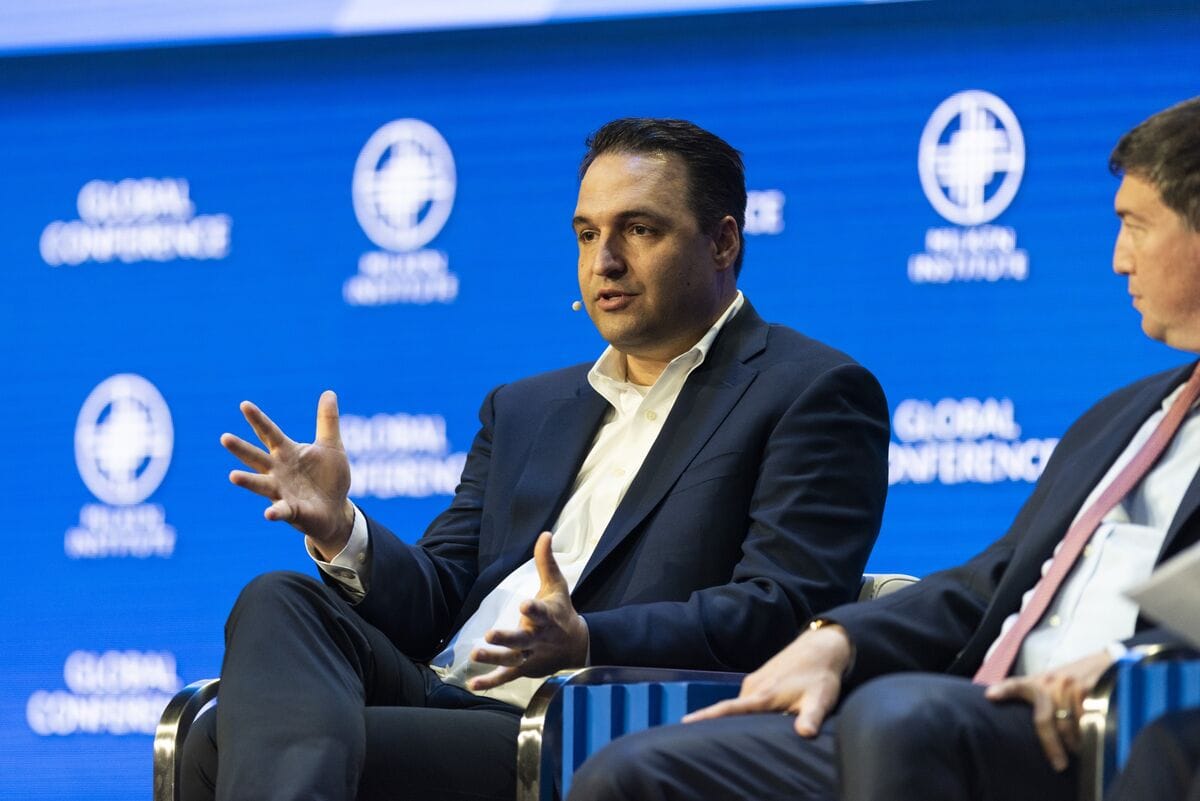
Good morning, everyone! I'm Kyle Samani, co-founder and managing partner of Multicoin. Today I'm going to talk about why we believe Solana will overtake Ethereum. Some of you may already agree, others might think it's absurd or impossible. My goal is at least to make you reconsider the dynamics at play.
The talk will be divided into three parts. First, I'll give a brief history of Ethereum, because it's important to understand where Ethereum stands and what its problems are. Next, I'll dig into why Solana is in a competitively advantageous position. And finally, we'll walk through some key on-chain metrics showing that Solana has already surpassed Ethereum or is very close — data that Multicoin follows closely.
Before we go further, two legal disclaimers. First, these are my personal opinions and do not reflect the views of Multicoin. Second, this is not financial advice and should not be construed as an invitation to engage any investment advisory services with Multicoin.
The History of Ethereum
Let's talk about Ethereum's history. Ethereum has been around for nine years. It launched in July 2015. I think that's important, and I'll come back to it throughout this presentation. Ethereum has had nine years — plenty of time to address the problems it faces and figure out what it wants to be, which I'll explain in detail shortly.
So, what happened during those nine years? I'd say three things stand out. The first is the rise of decentralized finance (DeFi) as the dominant blockchain use case. Although DeFi existed before 2020, it really exploded during "DeFi Summer" in 2020 — five years after Ethereum launched.
The second major development was Ethereum's decision to pursue a rollup-centric scaling roadmap in October 2020. That decision came just months after the EIP-1559 upgrade. But an obvious problem with the rollup path is that it isn't DeFi-friendly. It leads to things like cross-chain bridges and network fragmentation. They announced this path just two months after DeFi Summer ended, so it was clearly going to be disruptive.
The third major turning point was Ethereum's transition from Proof of Work (PoW) to Proof of Stake (PoS) in 2022. Notably, the Ethereum community had planned this even before mainnet launched in 2015, yet it took them seven years to complete it. That tells you Ethereum moves very slowly and lacks clear direction.
Next, I want to quickly address Ethereum's scaling roadmap. Honestly, it has changed multiple times. Early ideas included things like Plasma and state channels. If you remember, there were even wild ideas like Hyperledger. None of those panned out. Finally, after five years, they settled on this rollup-centric path in October 2020.
But even now, that path is being questioned — or at least partially questioned. More recent public discussions have centered on whether they should scale L1, whether they should introduce multiple block proposers, and so on. These are ideas much closer to what Solana has been doing, and they're being brought back into the Ethereum conversation.
We don't know what final decision Ethereum will make. It could take three months, six months, even nine months. But my point is that a roadmap laid out four years ago is now being questioned — at least in part — and may be completely overturned. Ethereum is nine years old, yet here it is back at square one. What's going on?
Before we move on to Solana, I want to make one more point: Ethereum is no longer the center of value capture. Their rollup-centric roadmap has explicitly moved transaction fees and MEV (Maximal Extractable Value) off L1 and onto L2s, L3s, and even L4s. While that path has succeeded in pushing transactions to L2, it has also pushed the vast majority of value creation away from ETH itself.
Ethereum's Unclear Direction
These folks will tell you that you can still use Ethereum for data availability (DA). And that's true. But I'll show you in the next few slides that DA is barely worth anything. There's plenty of DA on Ethereum and elsewhere. Ultimately, people will say "ETH is money," but that's simply a circular argument — it's unfalsifiable. They're just imposing their belief on you; there's no real logic behind it.
The litmus test for whether something is money is simple: walk into a coffee shop and ask how they price their coffee. If they price it in ETH, then ETH is money. If they price it in USD, then USD is money. That's the standard for money. Nothing else matters.
L2 Transaction Data
You can see how much transaction volume has migrated from L1 to L2 over the past three to four years. Clearly, almost all transactions today are on L2 — over 90% of transaction volume now lives on L2. That was the plan; they achieved their goal. But what's the result? They talked about this so-called DA value accrual rule. In practice, L2s are the ones making the money.
Look at Base's revenue and costs — Base is the largest L2 by most metrics. You can see clearly that Base is pulling in roughly $1 million in revenue per week, and their costs are essentially zero. The reason their costs are near zero is that they only need to pay for DA on L1, which may remain true going forward.
The point I want to make here is that while people still say L2s depend on L1, this chart makes it clear they are actually competitors. Base's goal is simply to generate profit for Coinbase shareholders. They want to maximize revenue and minimize costs. In practice, Base's incentive structure is directly opposed to Ethereum L1's incentive structure, because Base wants to minimize the fees it has to pay. If we look at other major L2s like Optimism, the chart looks nearly identical. The same pattern repeats for Arbitrum. Across all L2s, the trend is consistent.
Ethereum's Fading Identity
I want to be direct: Ethereum has never really clarified what it wants to be.
It launched nine years ago as the "world computer," but that concept was never clearly defined — and it still isn't today. Honestly, I don't think they needed to define what "computer" meant. It was just a marketing term. But nine years later, they still haven't told us what the actual use case of this platform is. While concepts like DeFi, Web3, and decentralized identity have emerged, Ethereum has become a blend of all of them. Frankly, it's lost focus — it has no standout direction. Even just a few weeks ago, Vitalik and other members of the Ethereum Foundation publicly said that DeFi is just circular reasoning and suggested people should use Ethereum for something else.
That's fine — I want Ethereum to do more too. But the problem is, after nine years, they still haven't provided any clear guidance. They haven't given us any clear vision. This lack of urgency and lack of direction has created a negative energy throughout the entire ecosystem. DeFi is the single most important thing on blockchains. You see it on Ethereum, you see it on Solana, you see it on every other chain. When I hear people say "DeFi doesn't matter," I just want to say: if you're not going to optimize for DeFi, tell us what you're optimizing for. But they can't, because they don't know either.
To recap: Ethereum has been around nine years. It took five years to produce a scaling plan and seven years to transition from Proof of Work to Proof of Stake. Ethereum has never been clear about what it wants to be. The scaling roadmap keeps changing. There's no direction. They don't know what they're optimizing for. And because of this rollup path, they've effectively moved most of the value accrual away from ETH and into L2s like Base.
Meanwhile, Ethereum still has a market cap of around $300 billion — one of the top 40 assets in the world. But the project still doesn't know what it wants to be. That's a clear structural problem. Now let's turn to Solana's history. Compared to Ethereum — which has never found a clear direction — Solana has always had a defined goal.
Solana's Origins
Solana's founder, Anatoly Yakovenko, started thinking about Solana in 2017 while writing trading bots for Interactive Brokers, an American brokerage (think a more sophisticated Robinhood). He realized he couldn't get real-time market data from the New York Stock Exchange and Nasdaq, while firms like Virtu and Jump Trading could access it easily. He felt that was deeply unfair and believed everyone should have open, equal access to market data.
That experience of inequality drove him to build Solana — aimed at making real-time market data accessible to anyone, 24 hours a day, 7 days a week. The Solana system was designed to optimize for information dissemination, so anyone with a computer and an internet connection could receive this data in real time. That vision became Solana's North Star, guiding them from day one to build a global, real-time decentralized exchange.
Although the journey proved far harder than expected — Solana began development in 2018 and eventually launched v1.0 in 2020 — they stayed true to the vision through network outages, congestion, and setbacks along the way. It wasn't until the v1.18 upgrade in May 2023 that Solana truly achieved that vision. That upgrade made on-chain limit orders, order cancellations, and other features work correctly, enabling smooth trading at near-zero fees.
Solana's success lies in its commitment to this ambitious and difficult vision. Despite the stumbles along the way, the current user experience is excellent, and it doesn't suffer from the bridge and fragmentation problems that Ethereum faces. On top of that, Solana's asset value has grown significantly — it now generates $500 million to $1 billion in annual revenue, primarily from MEV (Maximal Extractable Value). Solana's success proves the power of focus. It took them six years to turn their vision into reality.
That's also why we believe Solana's market cap will surpass Ethereum's. Next, let's look at some key on-chain metrics showing that Solana has already overtaken or is on the verge of overtaking Ethereum.
Overtaking Ethereum
First, blockchains are fundamentally financial systems. We can see that Solana's on-chain transaction volume has essentially caught up with Ethereum over the past year and has even surpassed it at times. That is the most important metric from our perspective. After all, the core function of a blockchain is to settle transactions.
Next, let's look at the second metric: validator rewards. Solana has caught up with Ethereum here as well. In some weeks, Solana's validator rewards have even exceeded Ethereum's.
The final metric is stablecoin transfer volume. While Solana still trails Ethereum here, its growth rate is impressive. About a year ago, stablecoin transfer volume on Solana was roughly 1/10 to 1/20 of Ethereum's. Today it's nearly half, showing that more and more capital is flowing through the Solana chain.
If you believe these metrics will continue on the same growth trajectory, it's reasonable to expect Solana's market cap to grow in the same direction.
Solana's Structural Advantages
Next, I want to talk about Solana's future and three unique advantages it has that are nearly impossible for other ecosystems to replicate — and why we're even more bullish on its outlook.
Token Extensions
The first advantage is Token Extensions. Token Extensions went live earlier this year. This provides a rich set of features for payment companies or large asset issuers globally — things like built-in revenue functions, confidential transfer capabilities (hiding sender and recipient), asset issuance and revocation, and more. These features were developed in direct response to demand from payment companies and Wall Street, and they are live on mainnet right now.
The reason I emphasize this is that we don't just have DeFi and other decentralized financial primitives. We also need to serve the needs of regulated finance. Without these built-in capabilities, regulated financial institutions won't be able to operate on-chain at scale. And these capabilities are fully integrated into Solana's L1 and ready to use. We think this is a massive advantage for Solana and nearly impossible to replicate within the Ethereum ecosystem.
Ethereum's EVM is fragmented across many different versions — Optimism, ZK-rollups, Polygon, and so on. They share roughly 98% of the same code, but they're not identical. If you want to establish a common standard across all the different EVM flavors — say, confidential transfer stablecoins — getting all these systems to communicate and coordinate is extremely difficult. This isn't a technical problem; it's a human coordination problem. You'd need to bring all these different groups together and get alignment, and that's incredibly hard.
The first project to use Token Extensions was PayPal's PYUSD stablecoin, which launched on mainnet a few months ago. We expect Token Extensions to become one of Solana's defining features over the next three to four years — differentiating Solana from the rest of the blockchain landscape.
Firedancer
Next, I want to talk about Firedancer. Firedancer is a brand-new Solana client that's about to go live. It's expected to launch in the next few days or weeks. They may announce the exact date at the Breakpoint conference tomorrow. If you're not familiar, Firedancer is a new client built from scratch, purpose-built by Jump Trading. Jump Trading is one of the largest high-frequency trading firms in the world — and among all HFT firms, Jump is known as the fastest.
We think this is significant because the Jump team has taken all the knowledge and experience they've accumulated building high-performance trading systems and applied it to this client. From day one, Solana's vision was to build a decentralized Nasdaq. Now, we're bringing the intellectual firepower of the world's top trading firm to build the fastest commission-free exchange on the planet. This system will be extremely scalable and fast. It will let the characteristics we love about Solana — composability, no bridges — shine even brighter with Firedancer.
Hardware Scaling
Finally, I want to talk about hardware scaling in the context of Firedancer. One of Solana's core design principles is that it scales naturally through parallel hardware. This has been a core thesis for the project from day one — and a thesis I've held personally for years. The core idea is simple: if you double or triple the number of cores in your system, you'd expect the system's throughput to double or triple. It's a very intuitive idea.
This principle doesn't just apply to Solana. Due to Moore's Law, over the past 50 years — and especially the past 10 to 15 years — systems that can take advantage of parallelism have seen dramatic real-world performance improvements as core counts have increased. This is especially important today, given the renaissance happening in the AI space. There is an enormous amount of capital flowing into the entire semiconductor value chain — from design to manufacturing — growing faster than at any point in the past 30 years.
All of this is driven by the explosive growth of AI chips, developed by startups, Nvidia, AMD, and others. Most of these chips are highly parallel. Not all of them are a fit for Solana, but that doesn't matter. We only need a few that can be adapted — and that will meaningfully boost Solana's performance. The beautiful thing is that this AI renaissance has nothing to do with crypto. Nobody in the crypto space needs to know or care about what's happening in AI. But those $30 billion, $40 billion, even $500 billion R&D investments in AI will indirectly power the performance of the Solana network.
This is a core principle at the heart of the system's design: to win what we believe will be one of the largest markets in the world — a decentralized Nasdaq. The EVM is a single-threaded processor. Despite nine years of talk about parallelism, they've made no real progress. We believe the full payoff of parallel processing will become increasingly apparent in the years ahead, especially as on-chain assets scale.
In closing, we are very excited about Solana's future. Everyone is rowing in the same direction. Everyone is committed to building this decentralized Nasdaq. We have a strong development community, asset issuers, Token Extensions, and a high-performance client — all collaborating to build a network that can scale and generate an asset that accrues value as the network grows. We look forward to watching Solana continue to develop in the years to come.