Nearly 80% of Hacked Cryptocurrencies Never Recover Their Price — Immunefi
According to the latest on-chain security report, the majority of hacked cryptocurrencies are unable to recover their price following an exploit. More than 77.8% of hacked cryptocurrencies experienced prolonged negative price impact six months after a hack occurred. Furthermore, 51.1% of hacked tokens dropped more than 50% in price six months after the protocol was attacked, according to a report from Immunefi shared with Cointelegraph. However, hacked protocols typically suffer the most severe losses in the aftermath of an incident, according to Mitche

According to the latest on-chain security report, the majority of hacked cryptocurrencies are unable to recover their price following an exploit.
More than 77.8% of hacked cryptocurrencies experienced prolonged negative price impact six months after a hack occurred.
Furthermore, 51.1% of hacked tokens dropped more than 50% in price six months after the protocol was attacked, according to a report from Immunefi shared with Cointelegraph.
However, hacked protocols typically suffer the most severe losses in the aftermath of an incident, according to Mitchell Amador, founder and CEO of Immunefi. He told Cointelegraph:
"Million-dollar losses from hacks often lead to even greater losses, driven by market impact and ecosystem dependency effects, compounded by months of lost time rebuilding a severely damaged team and operations."
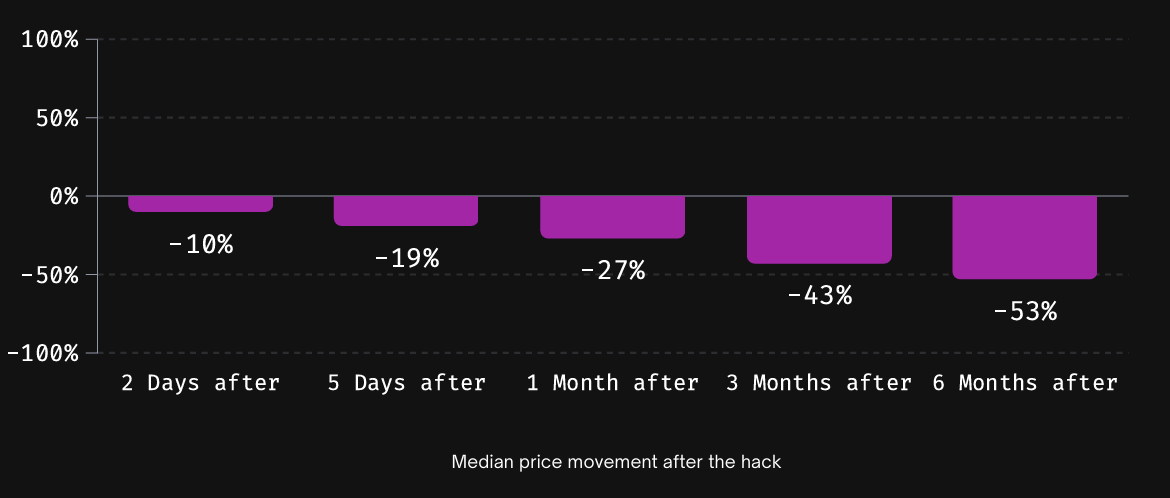
Token price decline following a hack. Source: Immunefi
This report was published nearly a month after a hacker stole more than $230 million from WazirX, an Indian cryptocurrency exchange, in the second-largest crypto hack of 2024 to date.
Related: Top 100 DeFi Hacks: Offchain Attack Vectors Account for 57% of Losses
CeFi Remains the Biggest Weak Point for Hackers
Decentralized finance (DeFi) applications have historically accounted for the majority of digital asset exploits.
However, centralized financial (CeFi) infrastructure has now become the biggest weak point in the crypto space, accounting for the majority of losses in 2024, according to Amador, who stated:
"Attacks on infrastructure are typically the most devastating hacks in the crypto world. A leaked private key, for example, can lead to the theft of all funds under its control."
Of the $1.19 billion in digital assets stolen so far in 2024, $636 million is attributed to CeFi vulnerabilities.
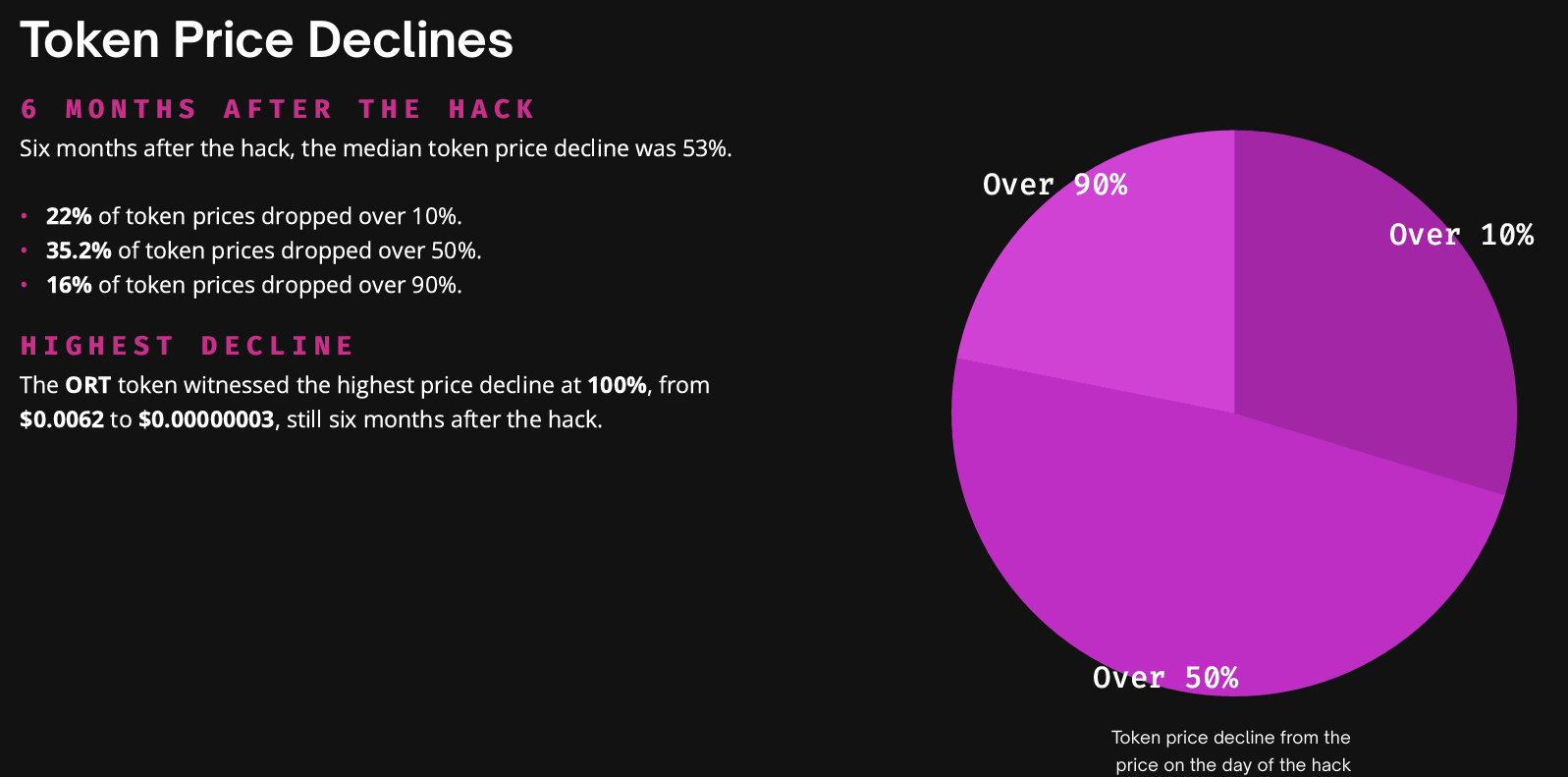
Median token price decline following a hack. Source: Immunefi
Hackers are increasingly targeting CeFi infrastructure such as cryptocurrency exchanges because the large concentration of funds can result in hundreds of millions of dollars stolen, according to Amador.
Immunefi is a leading crowdsourced on-chain security platform protecting over $190 billion in user funds.
Related: Polychain Leads $6.7M Investment in New Bitcoin Yield Network Corn
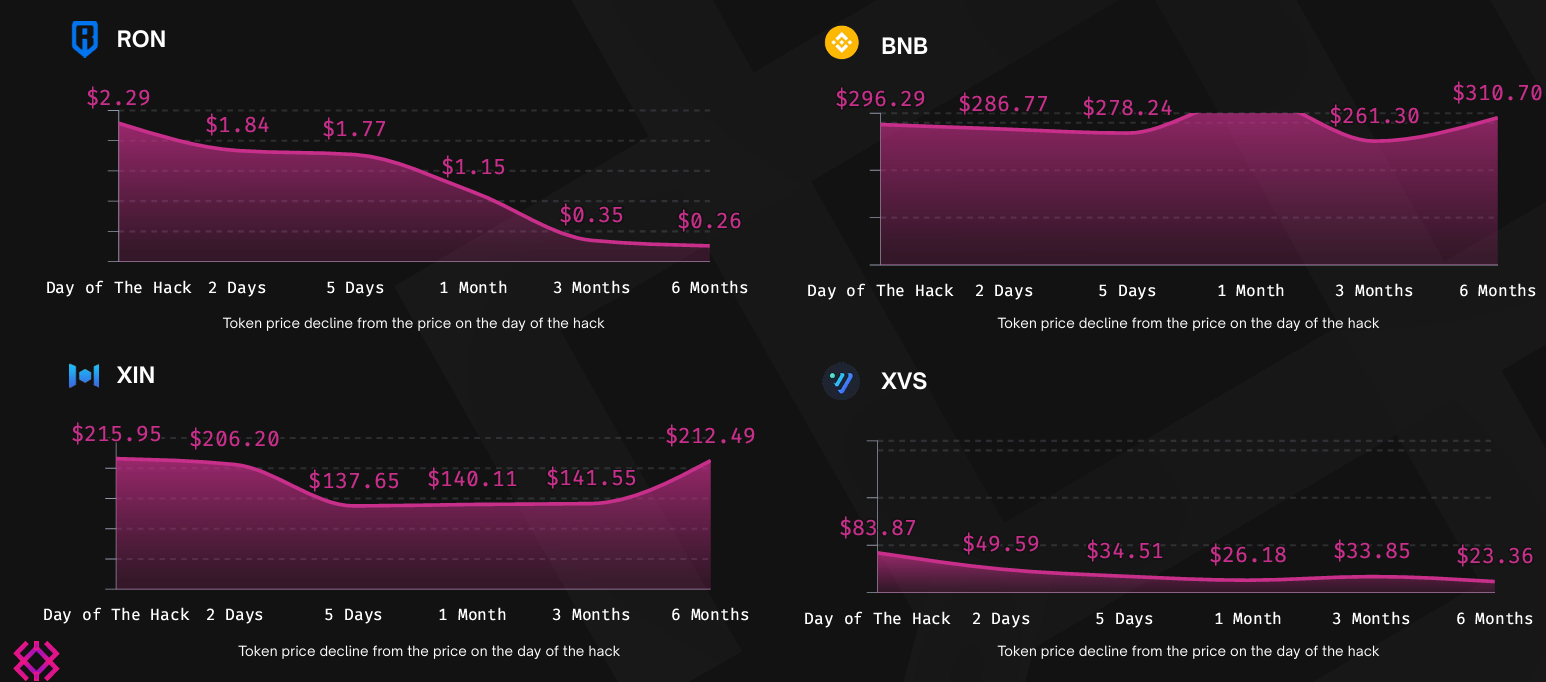
Established Crypto Projects Suffer Less Damage After a Hack
Some cryptocurrencies perform better following an exploit.
Tokens backed by more established teams and larger projects tend to recover better after exploits, according to Amador:
"Tokens that recovered include projects like BNB Chain, SushiSwap, THORChain, Olympus, and Optimism. All of these are either large ecosystems, like BNB Chain or Optimism, or long-standing protocols like SushiSwap, with dedicated communities."
This is largely because the larger ecosystems behind these tokens have greater buying power following adverse events, Amador explained.
Crypto hacks remain one of the biggest obstacles to mainstream crypto adoption, as the total amount stolen in 2024 could surpass the prior year.
As of February 29, more than $200 million had been lost to hacks so far this year, reflecting an increase of over 15% compared to the same period in 2023, when $173 million in digital assets were stolen.