ParaSwap Launches Intent-Based Protocol to Block MEV Attacks
Common MEV attacks like sandwich trading have netted attackers nearly $17 billion over the past 30 days. ParaSwap, a decentralized exchange aggregator, has launched an intent-based trading protocol designed to tackle one of crypto trading's most costly daily problems: MEV attacks. "MEV" (maximal extractable value) is a phenomenon where validators exploit their control over transaction ordering, inclusion, and execution on-chain to ex

Common MEV attacks like sandwich trading have netted attackers nearly $17 billion over the past 30 days.
ParaSwap, a decentralized exchange aggregator, has launched an intent-based trading protocol designed to tackle one of crypto trading's most costly daily problems: MEV attacks.
"MEV" (maximal extractable value) is a phenomenon where validators exploit their control over transaction ordering, inclusion, and execution on-chain to extract value from users. According to data from blockchain analytics platform EigenPhi, attackers have profited nearly $17 billion over the past 30 days from common attacks such as sandwich trading.
"MEV has cost users billions of dollars, degraded user experience, and made DeFi protocols less efficient," Mounir Benchemled, founder of ParaSwap, told Cointelegraph.
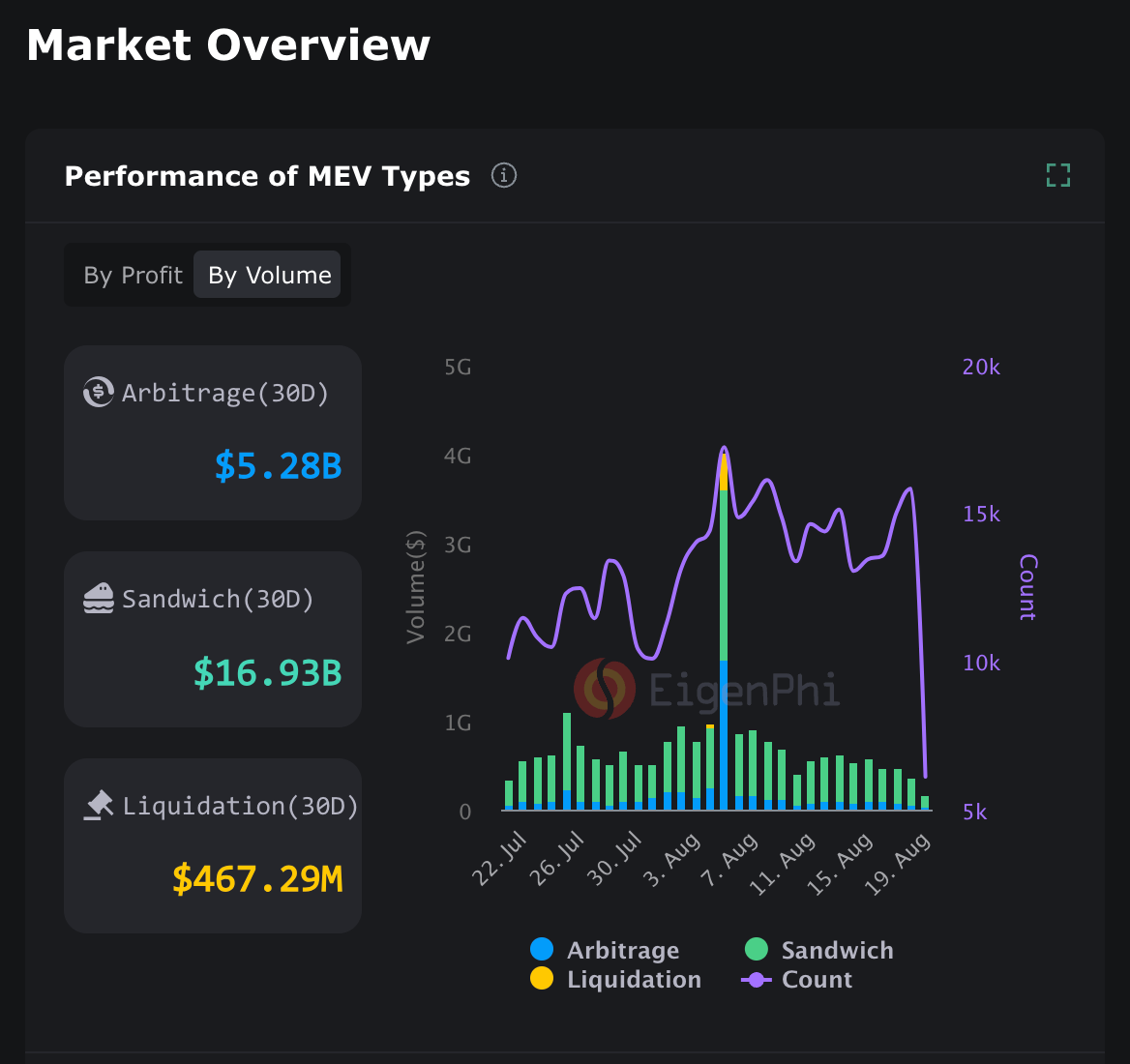
Profits from common MEV attacks over the past 30 days. Source: EigenPhi
In early 2024, the ParaSwap team began developing an intent-based trading model to provide MEV protection. According to Benchemled, the protocol allows users to define their trade "intent" instead of exposing raw transactions to mempools.
The DeFi boom of 2021 made MEV extraction particularly lucrative. Some protocols, such as Uniswap, became prime targets for bots, raising concerns about potential market manipulation.
A trader's stated intent when executing a transaction may reduce regulatory exposure around market manipulation under certain frameworks, but it does nothing to stop miners and validators from attempting to profit off attacks.
"MEV doesn't just affect individual trades — it undermines the fairness, accessibility, and decentralization of the entire DeFi ecosystem, making it one of the most pressing problems to solve," Benchemled argued.
Related: Paradigm urges European market regulators to take a nuanced approach to MEV
ParaSwap's Delta protocol addresses this by executing intended trades in three steps. The process begins with a pre-processing phase where the user's intent — such as a price range — is defined. That intent is then submitted to an auction where AI agents compete to propose the most efficient execution strategy, accounting for factors like liquidity and timing. The winning agent executes the trade through the Portikus Swap module, honoring the user's intent and minimizing MEV exploitation risk.
Other liquidity aggregators, such as 0x, are also actively developing strategies to mitigate MEV attacks — including batching transactions into a single pool to reduce attack surface and implementing priority mechanisms based on criteria beyond profit, such as time-based ordering and equitable block space distribution.
ParaSwap's dashboard reports more than $76 billion in trades processed through the protocol since 2019. The team's roadmap includes expanding support for additional chains and automated strategies, along with AI-powered agents.