Powell: No "Fed Put" — Financial Markets and Crypto Brace for a Challenging Summer
On April 17, Federal Reserve Chair Jerome Powell delivered a significant speech at the Economic Club of Chicago, confirming that the Fed will maintain a "wait and see" stance on interest rate policy and is not ready to cut rates until clearer economic data emerges. Notably, he flatly dismissed the possibility of a "Fed Put" — the market rescue mechanism triggered when financial markets face major turbulence. Immediate Market Impact Reaction to the Hawkish Stance
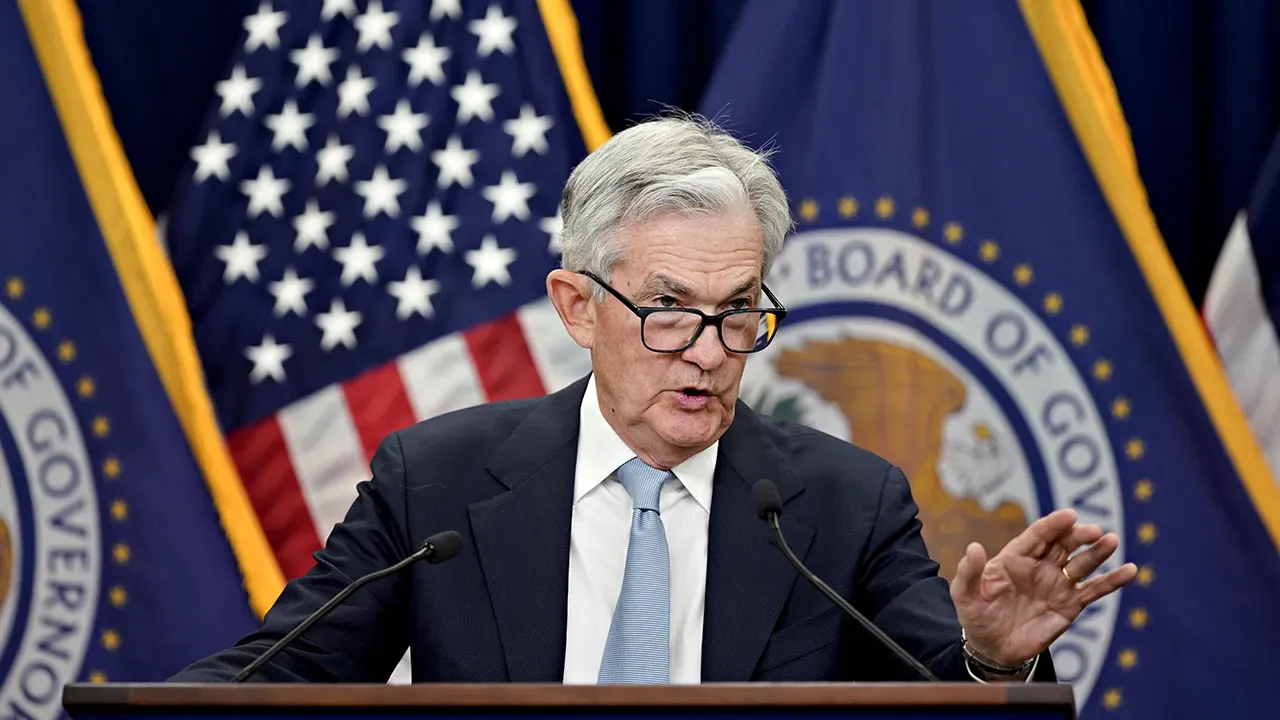
On April 17, Federal Reserve Chair Jerome Powell delivered a significant speech at the Economic Club of Chicago, confirming that the Fed will maintain a "wait and see" stance on interest rate policy and is not ready to cut rates until clearer economic data emerges. Notably, he flatly dismissed the possibility of a "Fed Put" — the market rescue mechanism triggered when financial markets face major turbulence.
Immediate Market Impact
Reacting to Powell's hawkish stance, U.S. financial markets sold off sharply across the board. The Dow Jones dropped more than 970 points, or roughly 2%. The Nasdaq fell as much as 4%, with major tech stocks including NVIDIA (-6.9%), Tesla (-5%), Apple (-3.9%), and Meta, Microsoft, and Amazon all posting steep losses.
Crypto markets were also hit, though the reaction was somewhat more muted. Bitcoin (BTC) hovered around $83,900, after touching a weekly high of $86,512. Ethereum (ETH) slipped 0.7% to $1,580, while Solana (SOL) bucked the trend with a 2.6% gain, approaching the $130 mark. According to Coinglass data, total liquidations across derivatives positions over 24 hours reached $275 million, affecting more than 134,000 traders.
ETF products also saw significant outflows:
- Bitcoin ETFs recorded $200 million in net outflows, bringing total net assets down to $93.6 billion.
- Ethereum ETFs saw $7.74 million in net outflows, with total assets at $5.3 billion.
Inflation Pressure and Policy Uncertainty
Powell noted that the economy is facing a "dual mandate conflict" — balancing inflation control against the need to support growth. He warned that if the U.S. becomes a "high structural-risk jurisdiction," it would negatively impact the country's appeal to investors.
Adding to the pressure is the lack of clarity around tariff policy under the Trump administration. While some new tariff rounds have been paused, the risk of imported inflation remains. Many economists, including Bloomberg's Chris G. Collins, expect the Fed to keep prioritizing inflation control over growth stimulus.
Crypto: Waiting for an Easing Cycle?
The latest report from Coinbase shows growing negative sentiment in the crypto market, driven in part by concerns over global tariffs and a prolonged tightening monetary environment. That said, crypto venture activity in Q1 2025 showed a modest recovery from the prior quarter, though it remains 50%–60% below the 2021–2022 peak. This has severely constrained fresh capital flowing into the ecosystem, particularly into altcoins.
Jack Tan, CEO of WOO X, commented: "Unless unemployment rises sharply, Powell won't be cutting rates anytime soon. Meanwhile, inflation risk is still being labeled 'transitory' — but that could change at any moment."
Conclusion
Financial markets are entering a period of deep uncertainty, characterized by cautious capital flows, elevated equity valuations, and tight monetary policy. Against this backdrop, crypto markets need to prepare for a volatile summer — and may have to wait until Q3 before seeing a fresh liquidity injection cycle, if economic conditions allow.