Singapore Crypto Week: Key Takeaways — Old vs. New Debates, Consumer Apps on the Rise, the Sovereign Individual as the New Trend
Singapore Crypto Week (Token2049 & Solana Breakpoint & Network State Conference) has officially wrapped, and I'm sitting in my hotel room writing up these notes. Here's a summary of my experience — I hope it offers a fresh perspective. This was my first time attending Token2049, and I combined all three conferences into one trip. Overall, it exceeded my expectations: Interest ranking: Network State Conference > Breakpoint > Token 2049 Token 2049: Strong business atmosphere with high-level
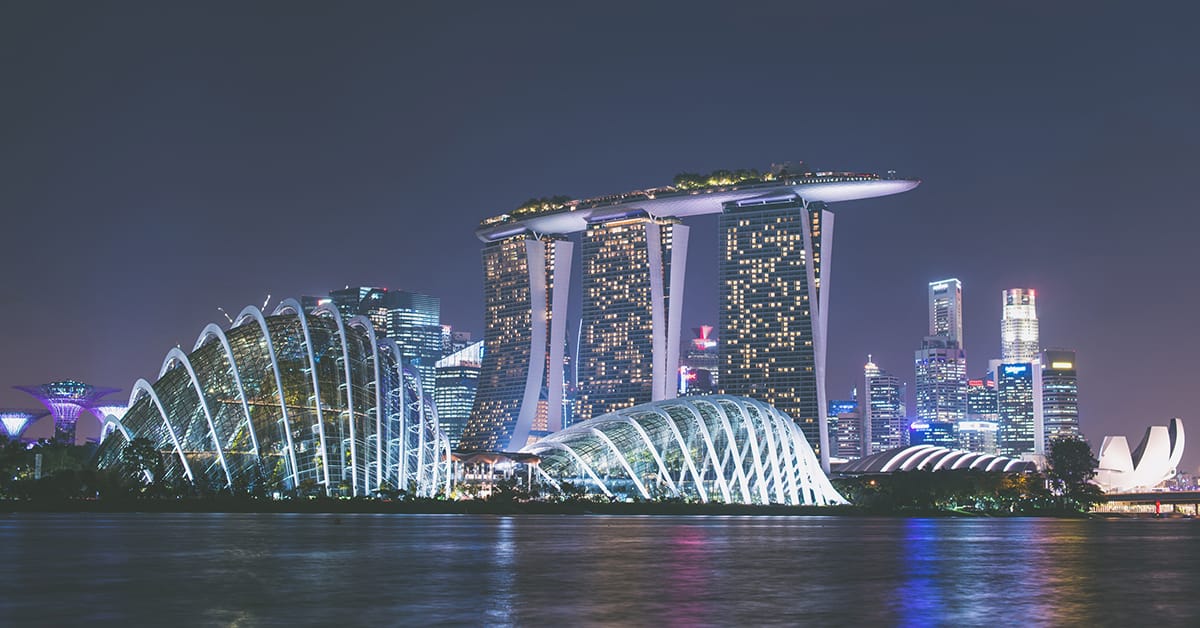
Singapore Crypto Week (Token2049 & Solana Breakpoint & Network State Conference) has officially wrapped, and I'm sitting in my hotel room writing up these notes. Here's a summary of my experience — I hope it offers a fresh perspective.
This was my first time attending Token2049, and I combined all three conferences into one trip. Overall, it exceeded my expectations:
Interest ranking: Network State Conference > Breakpoint > Token 2049
Token 2049: Strong business atmosphere with high-level discussions (and predictably, high-profile speakers). Solana Breakpoint: A vibrant product-building environment, engineering culture, focus on financial innovation, and notable attention to the Chinese community. Network State Conference: The most diverse attendees and speakers of the three. It explored the breakout concept of "Network States," spotlighting the broader crypto/tech community's interest in society, healthy living, and personal sovereignty. There was an intense desire among attendees to become "sovereign individuals" with the freedom to live anywhere in the world. It was compelling even if you're not in crypto/Web3 — I genuinely met non-crypto people at this conference. We also figured out how to attend for "free" (saving $2,000), and we'll share how we pulled that off.
Here are my personal takeaways from all three conferences:
- Token 2049: Star-studded speakers, tired narratives, consumer apps take center stage:
Every year, Token2049 gets criticized for its "high ticket prices" and "business-first" nature. That said, they consistently pull together an impressive speaker lineup. Highlights from the OKX main stage on day one:
- Balaji: Shared his thoughts on "tech democracy."
- Polymarket founder Coplan, Founders Fund partner Joey, and Alliance DAO founder Wang Qiao: Panel on "Building Web3 Consumer Apps."
- Arthur Hayes: Shared his macro views on the crypto space.
- Polychain founder Olaf: Discussed "Crypto x AI."
- Vitalik: Shared his vision for the future of crypto, and sang "Castle in the Sky" and "Spirited Away."
- Vitalik, OKX CEO Xu Xing, Circle CEO Jeremy: Continued the discussion on crypto's future.
- Polymarket founder Coplan & Balaji: A fireside chat.
- Bryan Johnson, the internet's anti-aging sovereign individual: Launched the "Don't Die App."
- Edward Snowden.
- And more...
When top-tier guests talk about top-tier topics, you only really need to hear them once — there's only so much of that you can absorb. With so many main-stage speakers and dozens of presentations, there wasn't much genuinely new information. Most people opted for business networking instead.
Worth noting: "consumer apps" came up again and again across multiple talks, including Vitalik's. It's clearly a hot topic, but very few people are actually breaking through. It was no surprise that Polymarket founder Coplan had two speaking slots.
Coplan was particularly sharp in the "Building Web3 Consumer Apps" panel, pushing back against VCs and showing real independent thinking:
- Clash 1:
VC: We prioritize apps that leverage crypto features. Coplan: Meeting consumer needs is what matters most. You don't need to make crypto the centerpiece.
- Clash 2:
VC: We back apps with gamification to drive user acquisition. Coplan: As a consumer, I love Temu (the international version of Pinduoduo). Gamification isn't the point. Temu's core strength is its product selection and pricing.
My personal take: we're finally seeing product-focused founders in this space. If founders — or the industry at large — don't actually care about user needs, how can they talk about "mainstream adoption" with a straight face?
Also worth noting: more and more founders are shifting into investor roles. Being a VC is getting harder by the day.
- Solana Breakpoint: Packed with product updates, felt like a product demo day, strong focus on the Chinese community:
Back in August, Solana dropped a video mocking the current state of "crypto conferences" — pointing out rooms with more speakers than attendees, full of "scammers" with no "victims" in sight.
They then revealed their plan to make Breakpoint different.
My take: they actually pulled it off. It was genuinely fun and met my expectations.
- Most notable: The official swag was exceptional. Unlike the paper bags, T-shirts, and throwaway flyers from Token2049, Solana Breakpoint's official merch included a thick tote bag and a reversible jacket — instantly raising the bar.
- Most interesting: Keynotes in a product demo day format. There were very few panels at Breakpoint. Instead, there were tons of keynotes running 5 to 15 minutes each:
No fluff — just product intros and updates. The final slide always had a QR code for the beta. We took notes on Jupiter, Helio, Phantom, Hivemapper, and Travala. Worth checking out!
The format felt like an Apple launch event or CES. It also pushed project teams to ship new product features for the event, rather than just telling stories.
A few other memorable moments:
Solana takes its engineering culture seriously. Tensor claimed they had only two engineers. At the event, attendees regularly pulled out laptops and started coding whenever they got tired of listening. The Solana Foundation itself is refreshingly pragmatic. No buzzwords. Foundation president Lily Liu said in her opening remarks, "Build for users, not for podcasts." I read that as both a critique of where crypto conferences have ended up and a direct challenge to Solana's own builders. There was a noticeably high proportion of Western attendees. I spotted some families with strollers — it seemed like they had no one else to look after the kids! Love to see it. Solana has a unique community program called "Superteam." Community members can earn grants by creating content around the ecosystem, effectively combining content creators, marketing, and applications. Unfortunately, it doesn't yet include the Chinese community.
The conference highlight was the official launch of Solana's Chinese community, "Solar," on the eve of Breakpoint. The energy was incredible. Here are some of my observations:
Solana has a strong community that genuinely values the Chinese community — hosting their first Asian event at Breakpoint speaks to that. This stands in stark contrast to the fragmentation and insularity of ETH's 50+ L2s. Everyone was energetic and engaged in genuine interactions. That was a noticeable contrast to the slightly more formal atmosphere at Token2049. (Community first, not PR first.) The density of beautiful women was high! And the male-to-female ratio was relatively balanced.
- Network State Conference: Most diverse attendees and speakers, exploring the future of the Sovereign Individual:
If Token2049 and Solana Breakpoint were essentially "crypto conferences" where people showed up to do business, the Network State Conference felt more like a "gathering of sovereign individuals."
Nobody was there to "work." I met several friends who had bought tickets six months in advance and flew in specifically for the conference. Attendees weren't just from the crypto world. The common thread was a shared aspiration to become a "sovereign individual" with the freedom to live anywhere on the planet. Many of the speakers were sovereign individuals themselves. Two who caught my attention were Naval (Naval Ravikant) and Pieter Levels, an indie developer pulling in $420,000 a month. The discussions centered on "how to provide better living infrastructure for sovereign individuals within Network States" — covering physical infrastructure, community, health, transportation, finance, culture, and more, offering a remarkably wide range of perspectives.
The conference started at 10:00, but people were already lined up at the entrance by 9:50. The moment the doors opened, they rushed in to grab front-row seats. This was the complete opposite of the sparse attendance typical at crypto conferences, and it reminded me of the energy I felt attending TED conferences ten years ago.
Here are some direct observations from Ruby:
The proportion of Chinese attendees wasn't high, but the ones I met were incredibly interesting and genuine. Two female friends flew into Singapore the night before, attended the conference, then headed straight to Changi Airport afterward. They're passionate about Network States and huge fans of Balaji and Naval. While crypto discussions usually revolve around prices and making money, at the NS conference I genuinely felt that people cared about society, about life, about health. The ability to integrate crypto as a tool to actually make a difference in society and in how people live — to take action — is what will truly cut through the noise and capture people's attention. In the end, what brings people together over the long haul, what makes them value each other, is never just profit. It's shared interests, shared passions, and shared values.
There's a lot to process, so I'll start by sharing some photos from the conference. We'll do a dedicated episode on the Network State Conference and the Network School later.
- Balaji's opening remarks:
We've had new companies like Google, new communities like Facebook, new currencies like Bitcoin. Can we create a new country — a Network State?
- Various pop-up city experiments around the world: Argentina, Montenegro, California, Honduras...
- Crypto wealth distribution and global passport recommendations:
5.6 billion crypto users globally, with total accumulated assets of $2.3 trillion. 170,000 individuals hold more than $1 million. 325 individuals hold more than $100 million. 28 individuals hold more than $1 billion. The 8 fastest-growing passports (look closely — see if you can identify the countries!)
- Naval was the crowd's favorite speaker of the day.
Some notes from his talk:
Solving your material situation (financial freedom) is the foundation for building your life. Wealth = the ability to effect change. If ChatGPT can replicate it, you probably can't monetize it. Creativity is about solving problems in new ways. Real value lies in solving problems we don't yet know exist. Self-improvement is real progress. Naval's greatest achievements have come from his passion for nature. Solitude is the fate of all great minds — Arthur Schopenhauer. Book recommendations: The Infinite Beginning and The Structure of Reality. Create things society needs to meet your material needs. You can't buy: a healthy body, a peaceful mind, or a home full of love. Don't seek respect — it will make you famous, turn you into a celebrity (and that's usually painful).
- Awkward moment: Sovereign indie developer Pieter Levels said he's not much of a crypto believer (though he does have friends working on ZK projects). Balaji spent several minutes trying to convince him, and we'll share more on that later.
- Why we, as content creators, attended Singapore Crypto Week — and how we got in for "free":
Those familiar with us know we're passionate about consumer crypto/Web3 apps and use cases. These are what will bring more everyday users into the crypto space.
Solana is a chain focused on consumer apps, and this was their first Asian event. We felt we had to learn and see it firsthand. We immediately checked the website and saw that tickets were $499. Even registering as a Creator would cost $199. A bit steep.
Then we noticed a small note on the Breakpoint website about Press Passes! If you have your own media platform, you can apply. I quickly filled out the form — it was pretty straightforward. The next day, I got a confirmation email.
We used the same approach to apply for a Token2049 Press Pass. That one was stricter, though. Each media outlet could only receive two passes — one for the editor-in-chief and one for the deputy editor. So we listed our titles as "Co-Founder" (being a "Co-Founder" in crypto finally comes in handy, haha).
One small detail: both applications asked for your website address and company email. This is where having your own domain really pays off. Combined with Cloudflare, we easily set up a web3brand.io email address. Sounds professional, right? 😉
This highlights the real benefits of building a content presence and having basic technical know-how, haha. You can try it yourself!
- The best part: meeting a lot of online friends in real life:
One of the biggest perks of Crypto Week is that it brings everyone together in one place at one time. That makes it easy to finally meet people you usually only talk to remotely or online.
We met many online friends at the conference and side events, including podcast guests we'd never met in person before. We're incredibly grateful to reader Kelly (also a podcast guest) for finding a super chill venue to host our reader meetup! We got to meet 20 readers at once.
As an introvert, I have to say there's a huge difference between chatting online and meeting face to face. It makes people feel real and three-dimensional. 😄😄😄
We also exchanged contact info with many other friends we didn't get to meet in person due to various circumstances. Until next time!