Surviving the 7.7 Magnitude Earthquake in Chiang Mai: A Digital Nomad's Diary
On the afternoon of March 28, 2025, a powerful 7.7 magnitude earthquake struck Myanmar, sending shockwaves rippling through neighboring countries, including Thailand. As a digital nomad living and working in Chiang Mai, I had a unique experience witnessing — and physically feeling — the earthquake firsthand. First Impressions: When the Ground Started Shaking While attending an English class at a learning center in Chiang Mai, I suddenly felt faint tremors coming from beneath the floor. At first, everyone in the classroom was caught off guard and didn't immediately realize it was an earthquake. Some students reacted quickly, ducking under their desks, while others hadn't yet fully grasped the situation. As the shaking intensified, I urged the whole class to move outside to open ground, and we rushed out of the classroom.
On the afternoon of March 28, 2025, a powerful 7.7 magnitude earthquake struck Myanmar, sending shockwaves rippling through neighboring countries, including Thailand. As a digital nomad living and working in Chiang Mai, I had a unique experience witnessing — and physically feeling — the earthquake firsthand.
First Impressions: When the Ground Started Shaking
While attending an English class at a learning center in Chiang Mai, I suddenly felt faint tremors coming from beneath the floor. At first, everyone in the classroom was caught off guard and didn't immediately realize it was an earthquake. Some students reacted quickly, ducking under their desks, while others hadn't yet fully grasped the situation. As the shaking intensified, I urged the whole class to move outside to open ground, and we rushed out of the classroom.
Standing outside, I watched ripples spreading across the surface of the pond in front of the learning center — a sight that left everyone unsettled. After a short while, when things seemed to calm down, we went back inside and resumed the lesson. In that tense atmosphere, we picked up new vocabulary: "earthquake" and "aftershock." Then, almost immediately, a strong aftershock hit, and we ran outside all over again.
Web3 and Digital Nomads: No Emergency Plan
Chiang Mai is home to a sizable community of Web3 professionals and remote workers. But when the earthquake hit, it became clear that no one had a concrete emergency plan for people working remotely. Everyone was left to manage their own crisis. In conversations with colleagues afterward, I heard stories of people's immediate reactions: one person frantically grabbed all their electronics before fleeing outside, while another didn't even have time to finish getting dressed — panic had taken over. Disorientation was the norm, and it's something most digital nomads simply aren't prepared for.
Bangkok: A Much Harder Hit
While Chiang Mai escaped relatively unscathed, Bangkok bore the brunt of the damage. Despite being over 1,000 km from the epicenter, an unfinished 30-story building in Bangkok collapsed entirely. Other high-rises were also affected, producing unforgettable scenes — water cascading from rooftop infinity pools down the sides of hotel towers like waterfalls onto the streets below. The incident sent shockwaves through the city, and traffic came to a near-standstill for hours, leaving residents struggling to get around.
From Web3 to Community: Emergency Relief in Action
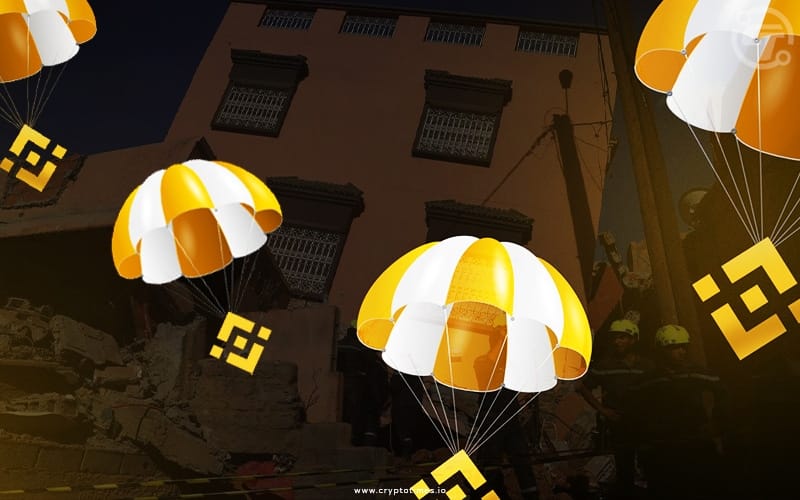
In the face of the disaster, organizations and communities across the Web3 space moved quickly to support those affected. Binance, one of the world's largest cryptocurrency exchanges, announced a donation of 500 BNB to Thailand and Myanmar. Meanwhile, IOST set up transparent smart contracts to channel relief donations to impacted areas. These actions demonstrated not only the Web3 community's capacity for rapid response, but also the real-world power of blockchain in supporting emergency relief efforts.
A number of major international humanitarian organizations also opened cryptocurrency donation channels — including the Red Cross, UNICEF, and Doctors Without Borders — to reach people in need. This served as a clear example of how blockchain technology can play a meaningful role in delivering emergency aid, especially when traditional banking systems are disrupted during a crisis.
Conclusion: Blockchain and Community in Crisis
This earthquake was a painful event — but also an opportunity to reflect on the role technology plays in times of crisis. Blockchain, with its ability to process transactions quickly and transparently, proved its practical value in humanitarian relief operations. In moments like these, blockchain is more than just technology; it's a powerful tool for connecting communities, maintaining transparency, and supporting people who need help.
Natural disasters can upend everything, but the strength of technology and the solidarity of community can always help us get through.