Trump Furious: Why Is America Determined to Ban CBDCs?
In the early morning of July 16 (Vietnam time), American media reported that three major crypto-related bills — including stablecoin regulations and a ban on CBDC issuance — failed to clear a procedural vote in the U.S. House of Representatives. The development left former President Donald Trump furious, prompting him to immediately convene an emergency meeting with 11 dissenting lawmakers, declaring: the GENIUS Act will pass tomorrow. So what actually caused the House to reverse course? Why has the CBDC (central bank digital currency)
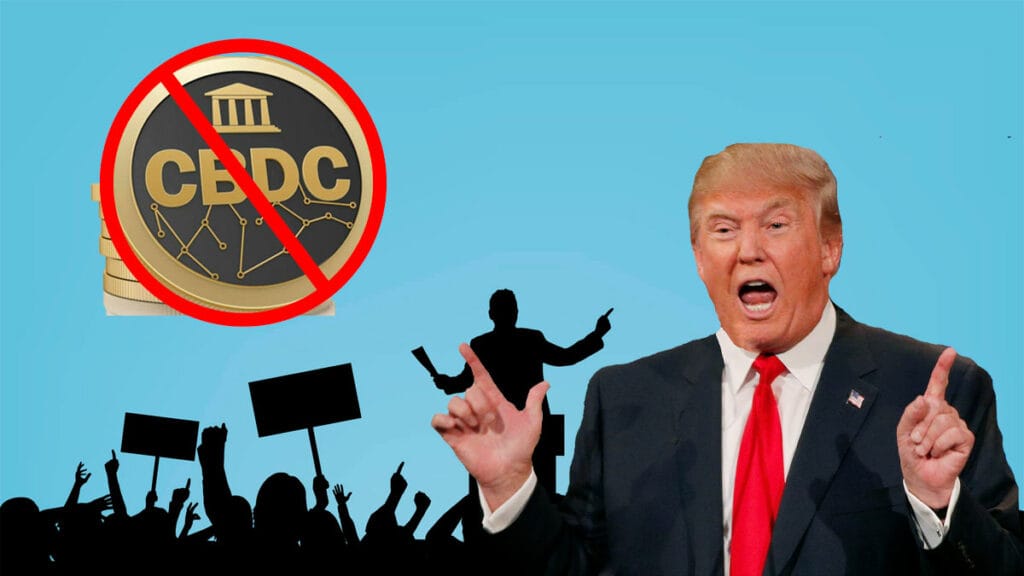
In the early morning of July 16 (Vietnam time), American media reported that three major crypto-related bills — including stablecoin regulations and a ban on CBDC issuance — failed to clear a procedural vote in the U.S. House of Representatives. The development left former President Donald Trump furious, prompting him to immediately convene an emergency meeting with 11 dissenting lawmakers, declaring: the GENIUS Act will pass tomorrow.
So what actually caused the House to reverse course? And why has the CBDC (central bank digital currency) become such a thorn in America's side?
Three Crypto Bills Go Down in Flames in the House
A failed vote of 196 in favor to 222 against prevented all three bills from advancing to formal floor debate. The bills in question were:
- GENIUS Act – A regulatory framework for stablecoins
- CLARITY Act – Digital asset market structure
- Anti-CBDC Surveillance State Act – A bill to ban CBDC issuance
Trump — who had publicly pledged to "get the GENIUS Act on his desk during the August session" — took a significant blow. Shortly after the vote, he posted on social media, claiming he had met with the dissenting lawmakers at the White House and secured a commitment to pass the bill "tomorrow morning."
But the reality is more complicated than that.
CBDCs — The Real Flashpoint of Political Conflict
According to analysts, it is CBDCs — not stablecoins — that sit at the true center of the standoff between Republicans and Democrats.
Just before the vote, crypto czar David Sacks — the head of the AI & Crypto working group under the Trump administration — unexpectedly announced that the administration would ban the issuance of any form of CBDC in the United States. That declaration triggered a fierce backlash from Democratic lawmakers.
Under President Biden, by contrast, the administration had prioritized advancing CBDC research and issuance. From Executive Order 14067 (March 2022) through Treasury Department statements in 2023, the Democratic administration viewed CBDCs as a tool for modernizing the financial system and improving control over monetary flows.
Republicans, guided by their "small government, big market" philosophy, argue that CBDCs threaten privacy, could become instruments of citizen surveillance, and pave the way for centralized financial control.
Trump: No CBDCs — Private Stablecoins Only
Shortly after taking office in January 2025, Trump signed an executive order banning all forms of CBDC issuance or testing in the United States, while simultaneously loosening regulations on private stablecoins. He also established a dedicated digital assets task force led by David Sacks — the group now spearheading the legislative trio: the GENIUS Act, the CLARITY Act, and the Anti-CBDC Act.
The reality is that the anti-CBDC bill serves as the legal foundation for the other two. Only once the United States officially says "no" to CBDCs does backing private stablecoins like USDC or USDT become fully legitimate and legally coherent.
Americans Have Little Appetite for CBDCs
This is not just a political battle — opposition to CBDCs also reflects a deeper strain of American social sentiment.
According to a survey published in 2024, 78% of Americans said it was "very unlikely" they would ever use a CBDC, with only 16% expressing support. That stands in stark contrast to countries like China, where the digital yuan (e-CNY) is being rolled out at scale.
The China International Capital Corporation (CICC) research center has noted that the U.S. is building a distinctly different path toward financial digitization — one that forgoes state-issued CBDCs in favor of encouraging the private sector to develop USD-backed stablecoins.
The Outcome: America Abandons CBDCs, Bets on Stablecoins
The partisan battle over digital currency may drag on, but the policy direction is becoming increasingly clear:
- Republicans want to outright ban CBDCs, promote private stablecoins, and encourage market-driven innovation.
- Democrats want to continue researching CBDCs as a public technology solution.
If bills like the GENIUS Act are passed into law, the United States would become the first country to formally reject CBDCs and instead build out a legally regulated stablecoin ecosystem.
That would also kick off a new kind of competition: U.S. stablecoins vs. other nations' CBDCs — a clash between market freedom and state power in the global race to define the future of money.
Bottom line:
Trump's anger isn't just about a single failed vote — it's about watching his vision of making the United States the world's premier digital asset hub get blocked. Meanwhile, opposition to CBDCs is becoming a defining political banner for the Republican Party, and one that will remain a hot-button issue heading into the next presidential election.