VanEck: Bitcoin Miner "Capitulation" May Signal Market Bottom Is Near
According to VanEck, one of the world's leading asset management firms, the recent wave of Bitcoin miner capitulation may be sending a positive signal for BTC price over the medium and long term. In a report published earlier this week, VanEck's crypto research team — led by Matt Sigel, Head of Digital Assets Research, and Patrick Bush, Senior Investment Analyst — stated that prolonged declines in Bitcoin's hashrate have historically served as a contrarian bullish signal.
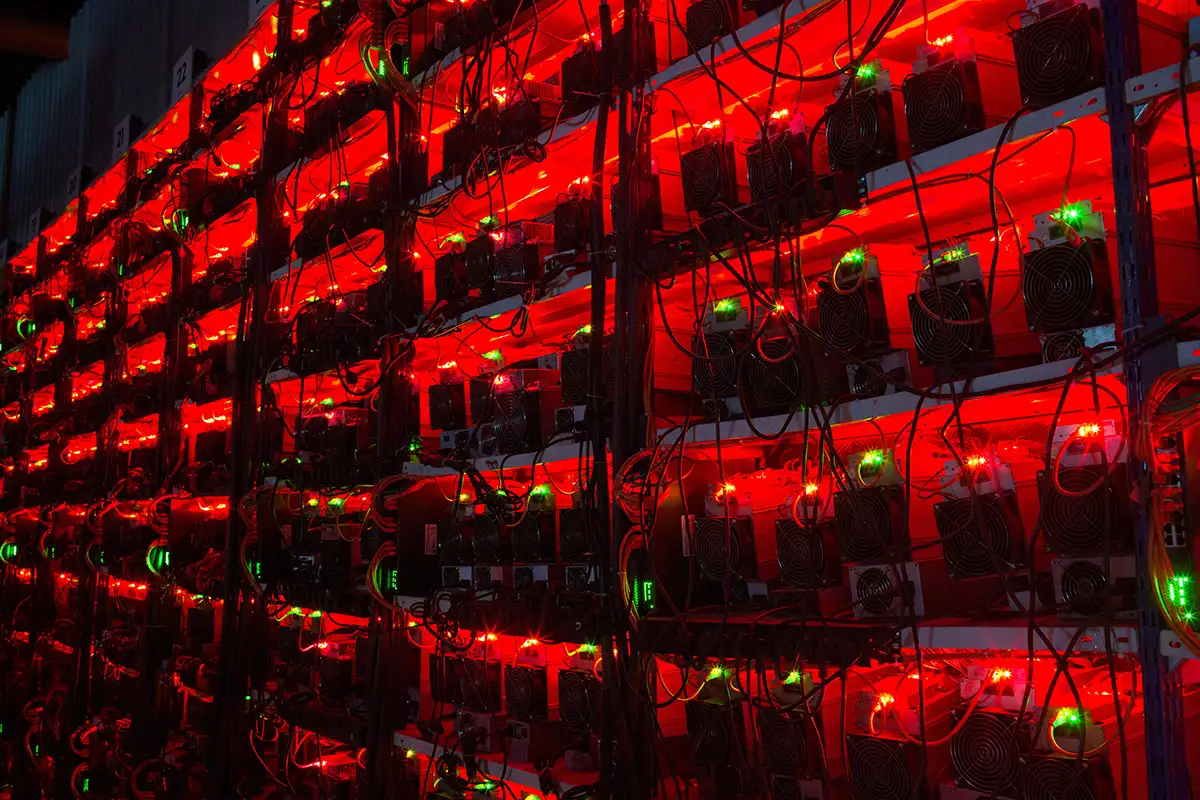
According to VanEck, one of the world's leading asset management firms, the recent wave of Bitcoin miner capitulation may be sending a positive signal for BTC price over the medium and long term.
In a report published earlier this week, VanEck's crypto research team led by Matt Sigel — Head of Digital Assets Research — and Patrick Bush, Senior Investment Analyst, stated that: prolonged declines in Bitcoin's hashrate have historically served as a contrarian bullish signal.
Falling Hashrate — A Familiar Signal Before Recoveries
Specifically, Bitcoin's network hashrate dropped approximately 4% in the month ending December 15, marking the sharpest decline since April 2024. According to VanEck, this typically occurs when less efficient miners are forced to shut down as costs exceed revenue.
VanEck's data going back to 2014 shows:
- When hashrate declined over the prior 30 days, BTC returns were positive 90 days later in 65% of cases, compared to just 54% when hashrate was rising.
- Over a 180-day window, negative hashrate periods were associated with positive BTC returns in 77% of cases, with average gains reaching 72% — far outpacing periods of rising hashrate.
"When hashrate declines persist, Bitcoin's forward returns tend to be higher in both frequency and magnitude," the VanEck research team noted.
Heavy Pressure Weighing on Bitcoin Miners
With Bitcoin still facing correction pressure, many miners are in serious financial distress. According to CoinGecko, BTC is currently trading around $88,400, down nearly 30% from its all-time high of $126,080 set on October 6.
VanEck noted that the breakeven electricity cost for the Bitmain S19 XP (2022 generation) — one of the most widely used mining rigs — has fallen nearly 36%, from $0.12/kWh in December 2024 to just $0.077/kWh by mid-December. This reflects how brutal the current mining environment has become, forcing many miners out of the market.
China Powers Down Mining Rigs, AI Absorbs the Capacity
The primary driver behind the hashrate decline, according to VanEck, is the recent shutdown of approximately 1.3 gigawatts of Bitcoin mining capacity in China. Notably, much of that power is likely being redirected toward the surging energy demands of AI data centers.
VanEck estimates this trend could eliminate up to 10% of total global Bitcoin hashrate in the near term, adding short-term pressure while simultaneously contributing to a "cleansing" of the network.
Many Countries Still Quietly Backing Bitcoin Mining
While some regions are pulling back, VanEck noted that as many as 13 countries currently support or directly participate in Bitcoin mining operations. That list includes Russia, France, Bhutan, Iran, El Salvador, UAE, Oman, Ethiopia, Argentina, Kenya, and most recently Japan.
According to the analysts, state-level participation signals that Bitcoin mining is still viewed as strategic infrastructure, particularly amid intensifying competition over energy, data, and technological sovereignty.
Short-Term Pain, Long-Term Opportunity?
History shows that miner capitulation phases tend to coincide with cycle price bottoms, as selling pressure from miners fades and the network grows more efficient.
"If history repeats, the current pressure on miners could be the very setup for Bitcoin's next recovery cycle," VanEck concluded.