"We sat in the dark so the Bitcoin miners could keep running" – The Shadow of Bitcoin Mining Behind Iran's Energy Crisis
Even as tensions between Iran and Israel appear to ease with ceasefire agreements, a major question still hangs in the air: what has really been driving the widespread blackouts across Iran in recent years? The answer, according to a growing number of analysts and Iranian citizens, may lie in rows of Bitcoin miners quietly humming inside military bases and industrial warehouses — facilities believed to be operated by organizations with close ties to the government. The State-Run "Crypto Mine" Power Drain
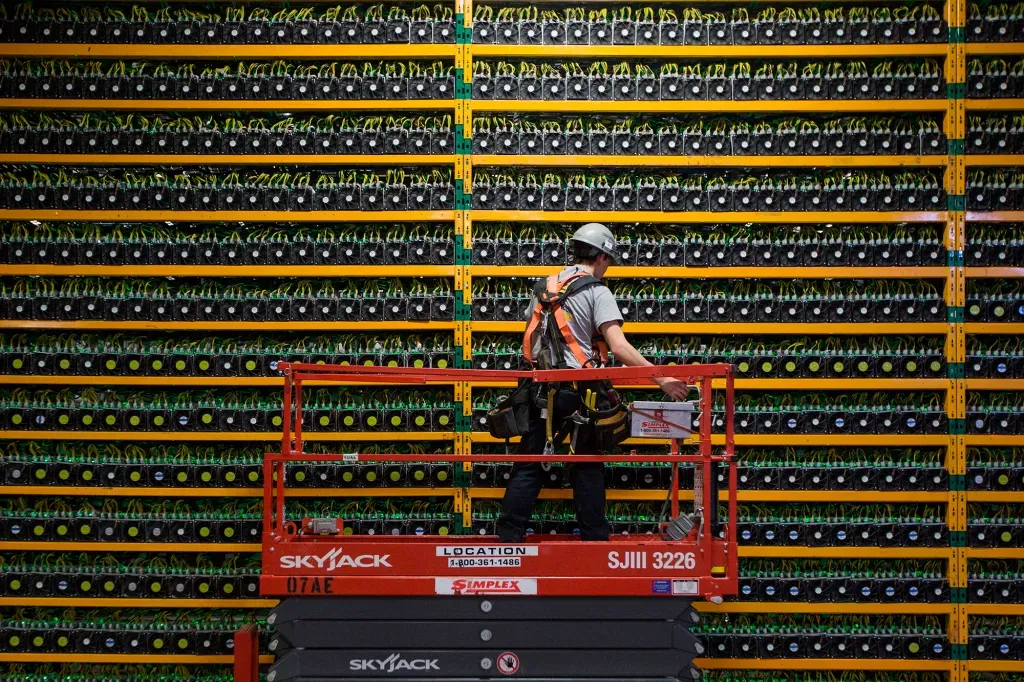
Even as tensions between Iran and Israel appear to ease with ceasefire agreements, a major question still hangs in the air: what has really been driving the widespread blackouts across Iran in recent years? The answer, according to a growing number of analysts and Iranian citizens, may lie in rows of Bitcoin miners quietly humming inside military bases and industrial warehouses — facilities believed to be operated by organizations with close ties to the government.
The State-Run "Crypto Mine" Power Drain
According to reports from the NCRI (National Council of Resistance of Iran) and blockchain researchers, Iran was among the first countries to treat cryptocurrency mining as a tool for circumventing financial sanctions. Starting in 2019, the government legalized Bitcoin mining, attracting investment with the promise of cheap electricity — on the condition that all mined Bitcoin be sold to the Central Bank of Iran.
Behind that policy, however, lies a mining ecosystem widely believed to be run by the Islamic Revolutionary Guard Corps (IRGC) and various religious and military entities. These mining "farms" are located in special economic zones or military installations, virtually beyond the reach of civilian oversight. A single representative mining operation in Kerman Province reportedly consumed as much as 175 MW of electricity — equivalent to the demand of tens of thousands of households.
2 GW of Power — and Millions of People Left in the Dark
In 2021, major cities including Tehran and Isfahan suffered repeated blackouts through the summer. The national electricity authority estimated that mining activity — both legal and illegal — could be consuming as much as 2 GW, equivalent to the output of two or three nuclear power plants. A single standard ASIC miner can draw as much electricity as 10 households, and mining a single Bitcoin requires roughly 300,000 kWh — enough to power a small city for a day.
While homes, hospitals, and factories were cut off during scheduled "peak-hour" blackouts, the protected mining facilities stayed lit. One Tehran resident vented on social media: "We sat in the dark so the Bitcoin miners could keep running."
A Sanctions Workaround — or an Engine of Economic Self-Destruction?
The Iranian government has used Bitcoin as an indirect channel to convert subsidized energy into hard currency, sidestepping Western sanctions. As of 2021, Iran accounted for an estimated 4–8% of the global Bitcoin network's total hashrate. An analysis by Elliptic found that the electricity used for Bitcoin mining was equivalent to 4% of Iran's oil export output — meaning that energy was no longer serving ordinary citizens, but being converted into gains for a privileged few.
The Public Pays the Price
Beyond economic losses estimated at $25 billion per year, the persistent blackouts have disrupted hospital operations, paralyzed transportation, and crippled major industries including steel and cement.
Frustration has run high as state media continued to blame residents for "wasteful electricity use" rather than acknowledging the role of state and military institutions in the energy crisis. Crackdowns targeted citizens running a handful of small miners at home, while hundreds of thousands of large machines inside military compounds operated without interference.
What Does the Future Hold for Iran?
The price Iran is paying for mining cryptocurrency on subsidized energy is eroding public trust in the government, deteriorating infrastructure, and an economy being hollowed out by power-connected interest groups. Experts warn that unless the government brings mining activity in line with true market conditions, strips military organizations of their privileges, and increases transparency in energy policy, Iran may keep trading away light, health, and economic development for... a few more Bitcoin blocks.