Coinfest Asia 2026 Closed With 10,000 Attendees, Indonesian Regulators On Stage, and a $100,000 Trading Final
Two days across five Bali beach clubs, 10,000 attendees from 90 countries, OJK and Bank Indonesia inside a closed-door institutional summit, and a US$100,000 trading grand final. What the post-event numbers say for traders in Southeast Asia.
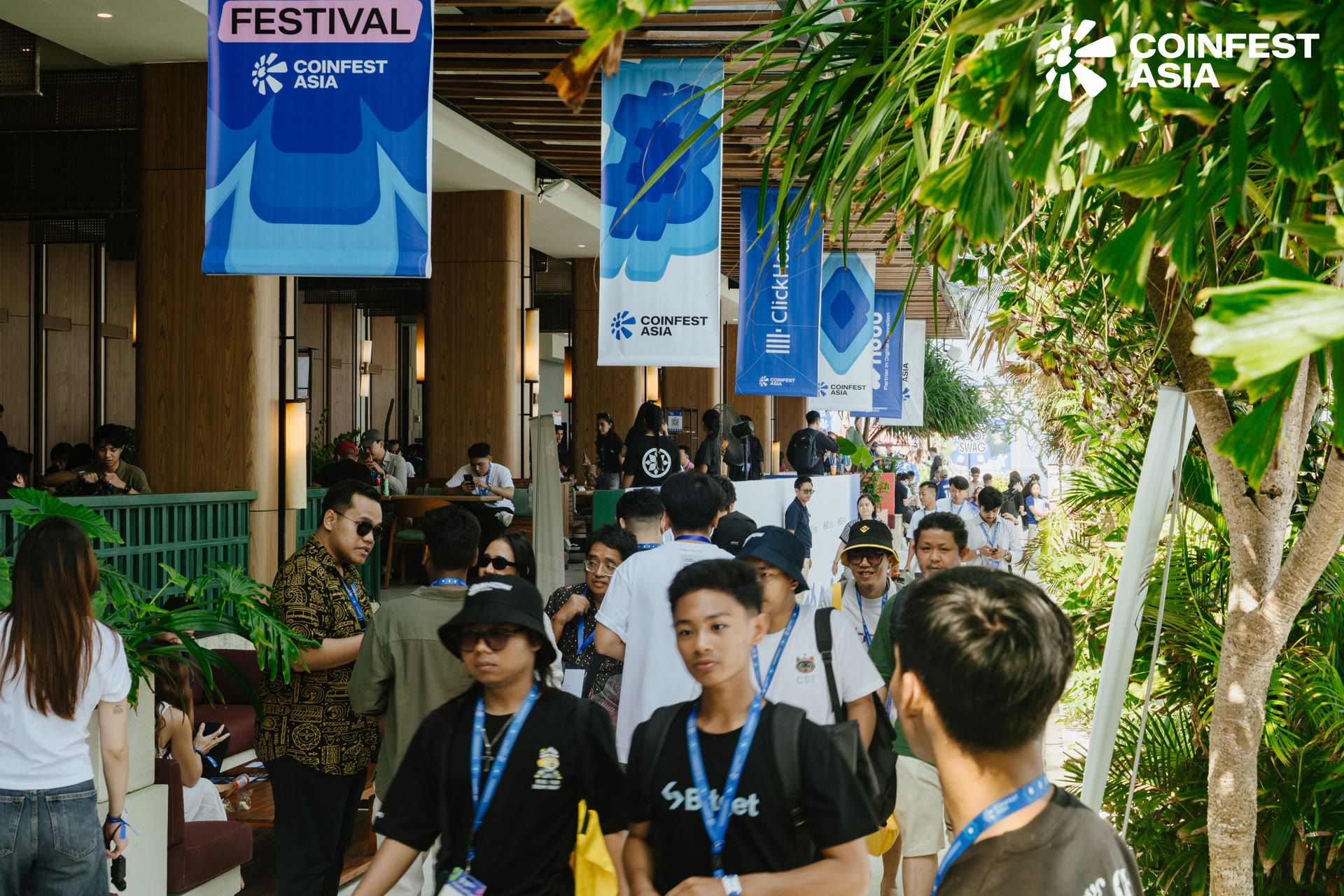
Coinfest Asia 2026 closed on 21 August after two days across five beach clubs in the Melasti Beach area of Bali, drawing 10,000 attendees from 90 countries. The line that separated this edition from previous ones was not the crowd size — it was who sat on stage next to the founders: the chairman of the Indonesian parliament's finance commission, a vice minister, and the OJK official who supervises crypto assets.
That mix is the reason the event matters to anyone trading from Southeast Asia. Indonesia is assembling a licensed market structure in public, and Bali is where the industry and the regulators are doing it in the same room.
Attendees at Coinfest Asia 2026. Photo: Coinfest Asia
Coinfest Asia has run since 2019, organized by Coinvestasi, part of Indonesia Crypto Network (ICN). It started as a community meetup in Jakarta.
"The industry already has many conferences. But Coinfest takes a different approach: it is a place where trust can truly be built between regulators and industry players, investors and founders, as well as global companies and local ecosystems," said Steven Suhadi, Founder of ICN. "The festival format is not simply about aesthetics, but a deliberate design to craft deeper insights and a platform where online communities become real world relationships."
Who showed up
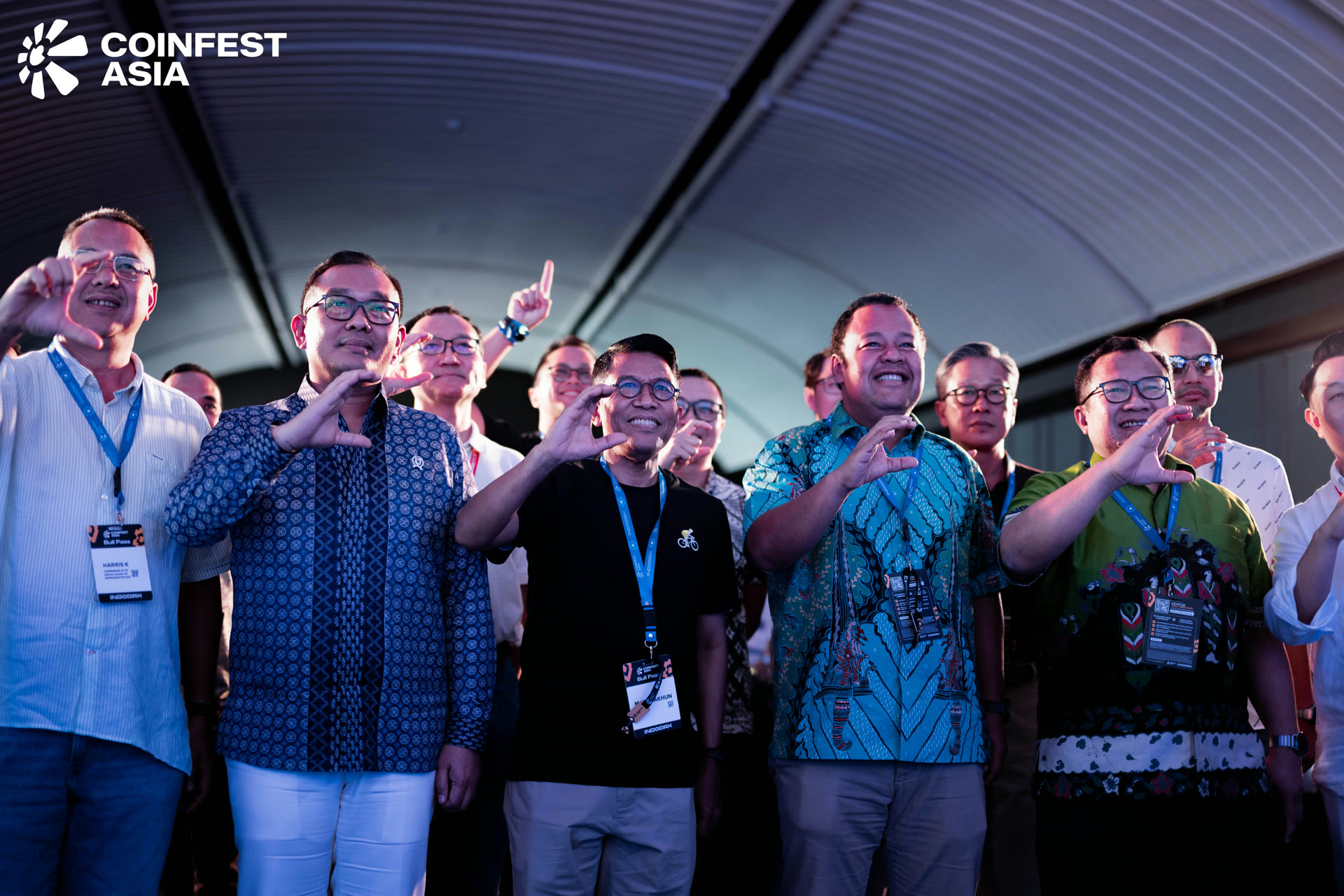
Representatives from Indonesia's Ministry of Investment, DPR, and OJK. Photo: Coinfest Asia
On the Indonesian side: Mukhamad Misbakhun, Chairman of Commission XI of the House of Representatives (DPR RI); Todotua Pasaribu, Vice Minister of Investment and Downstreaming and Deputy Head of BKPM; Adi Budiarso, who runs supervision of financial technology innovation, digital financial assets and crypto assets at the Financial Services Authority (OJK); Pantro Pander Silitonga, Executive Director of the National Economic Council (DEN); Kai Hamza Pang, CEO of ICEx Group; and William Sutanto, Co-Founder and CEO of INDODAX.
From the global side, in person: Alexander Svanevik (CEO, Nansen), Vugar Usi (CEO, MEXC Ventures), Angela Ang (Managing Director APAC and President of Singapore, BitGo), and Chengyi Ong (Director of Policy and Regulatory Strategy APAC, Circle). Yi He, Co-Founder and Co-CEO of Binance, and Charles Hoskinson, Founder and CEO of Input Output, joined virtually.
The number that got attention: Rp300–500 trillion
Pantro Pander Silitonga used his session to present the Indonesia International Financial Center (IIFC), a plan projected to attract roughly Rp300–500 trillion (US$16.9–28.1 billion) in investment.
"Financial services will be at the core, from banking and insurance to private equity. We also want to bring in new asset classes, including crypto, as part of this development. Let's work together to develop this market," Pantro said.
Misbakhun, whose commission covers finance in the DPR, framed the regulatory posture in one sentence: "Supervision must not hinder innovation. We must not allow regulation to kill innovation." He pointed at tokenization of mining, property, and infrastructure assets as the areas he expects to move in Indonesia.
Yi He put the industry's job differently: "Our challenge today is no longer proving that blockchain can work, but showing that the technology can truly benefit society at scale." Hoskinson, looking at 2030, listed stablecoins, real-world assets, regulation, privacy, and AI as the next phase, and closed with "the revolution is far from over. In fact, it is only just beginning."
Stablecoins moved from panel topic to payments plumbing
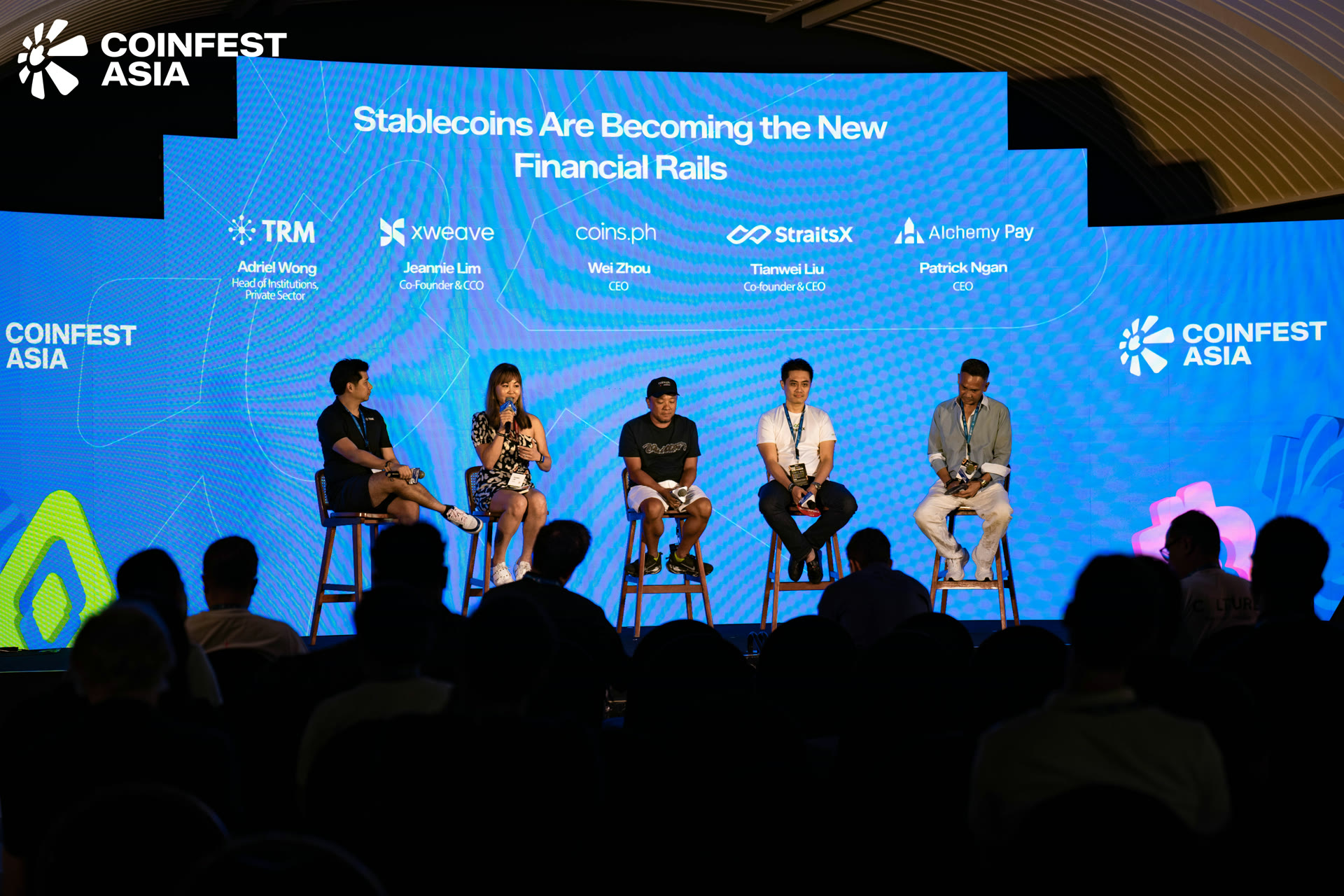
"Stablecoins Are Becoming the New Financial Rails" panel, with TRM, xweave, coins.ph, StraitsX, and Alchemy Pay. Photo: Coinfest Asia
The Institutional Summit — closed-door, supported by ICEx, CACI, and ICC, the trading, clearing, and custody legs of Indonesia's licensed stack — put OJK, Bank Indonesia, Danantara Indonesia, the Indonesia Stock Exchange, Bappenas, and KADIN in a room with BRI, Superbank, Xendit, Tether, Coinbase, and BitGo.
Two sessions defined the agenda: "Tokenization: Which Assets Will Actually Scale in Asia?" and "Stablecoins in Asia: From Crypto Settlement to Real Corporate Payments." The second title is the tell. Stablecoins were discussed as corporate payment rails, not as a trading instrument.
"At Coinfest Asia, industry players, regulators, and investors meet in the same space. In my view, a format like this is not only interesting, but should also continue to be strengthened and expanded in the future," Misbakhun said.
US$100,000 on the trading side
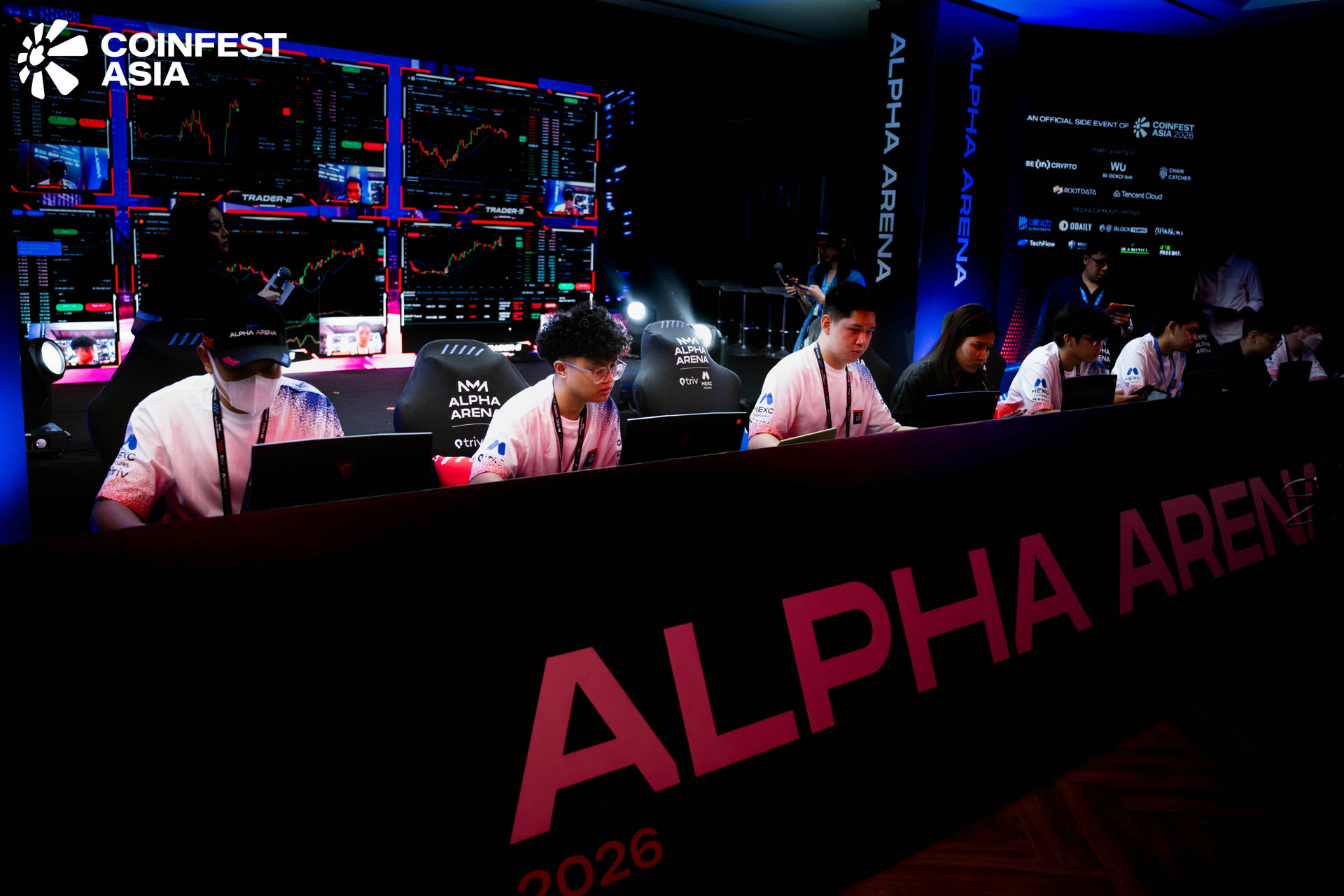
Alpha Arena Grand Final, powered by MEXC Ventures. Photo: Coinfest Asia
The Alpha Arena Grand Final brought traders from across Asia into a live competition with a US$100,000 prize pool, supported by MEXC Ventures. On the builder side, Protocol Camp Cohort 9 — run by ShardLab with Indonesia's Ministry of Creative Economy (EKRAF) — closed with six Indonesian teams demoing Web3 and AI products.
Supporting companies included ICEx Group (ICEx, CACI, ICC), MEXC Ventures, INDODAX, and CFX.
What this means if you trade from Vietnam
Three takeaways worth holding onto.
First, Indonesia now has the closest working template in the region for a regulated market: an exchange, a clearing house, and a custodian, all licensed, sitting at the same table as the central bank and the stock exchange. Vietnamese traders still route most flow through offshore venues and USDT P2P, so Indonesia is the nearest picture of what a domestic licensed venue would actually look like.
Second, the stablecoin conversation has moved to corporate payments. Circle, Tether, StraitsX, coins.ph, and Alchemy Pay were all on the ground discussing settlement, not yield. If USDT is your working capital, the rails around it are changing faster than the token itself.
Third, exchange marketing budgets are going into trading competitions. A US$100,000 grand final in Bali is the same acquisition tactic several venues are now running in Vietnamese Telegram groups — worth reading as a customer-acquisition signal, not as free money.
We covered what Coinfest Asia 2026 promised before the doors opened; the three-track format held up, with the institutional side doing the heaviest lifting.
Source: Coinfest Asia 2026 post-event press release and photos, provided by the organizer. Edited by web3station for length, structure, and regional context.